
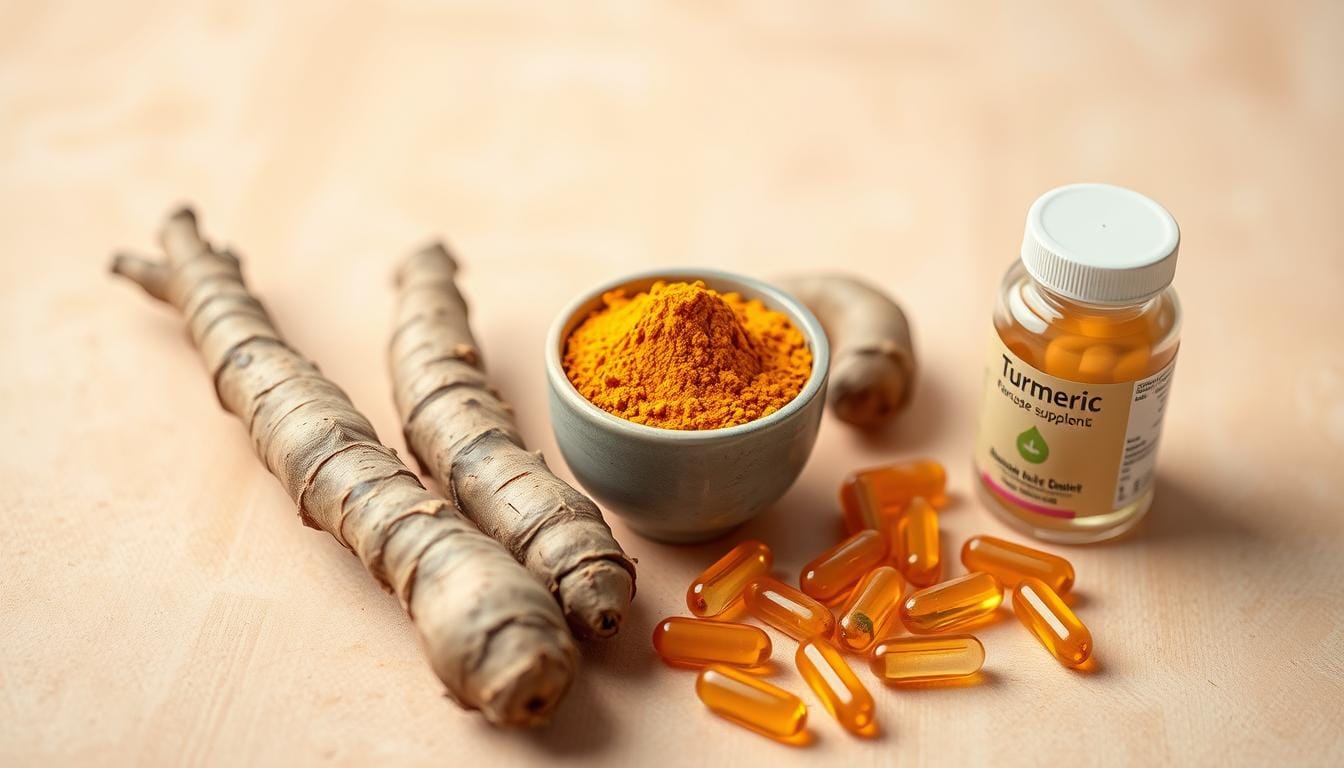
Did you know that nearly 75% of women face menopausal symptoms, with hot flashes being the most common? This statistic shows the urgent need for effective solutions. Turmeric, a vibrant golden spice, has been used for centuries in traditional medicine. It’s now getting attention for its potential in menopause relief.
Women looking for natural remedies are finding hope in turmeric’s anti-inflammatory and antioxidant properties. Its active compound, curcumin, may help with hot flashes, mood swings, and sleep issues. These are common symptoms of menopause. We’ll look into how turmeric could help in managing menopause symptoms, based on recent studies and expert opinions.
Quick Recommendation: This blog tries to offer useful products that might help support you in your menopause journey. If you are looking for a recommendation, please follow this link. Turmeric and Ginger Supplements
Key Takeaways
- Turmeric has been used traditionally for its health properties.
- It contains curcumin, which may aid in menopause relief.
- Natural remedies like turmeric are gaining popularity for menopause management.
- Scientific research backs turmeric’s potential benefits for menopausal symptoms.
- Incorporating turmeric into your diet could help manage symptoms like hot flashes, mood swings, and sleep issues.
Introduction to Menopausal Symptoms
Menopause is a big change, marking the end of your menstrual cycles. It usually happens in your 40s or 50s. Knowing about understanding menopause helps you see that these changes come from lower estrogen levels.
Some common symptoms include hot flashes, night sweats, mood swings, and trouble sleeping. These happen because of hormonal changes. For example, hot flashes can make you feel suddenly warm. Night sweats can mess up your sleep, making you tired and irritable.
Exploring these symptoms can help you understand their impact on your life. Knowing about understanding menopause lets you find ways to handle these symptoms. You might even try remedies like turmeric to feel better.
The Benefits of Turmeric
Turmeric is known for its bright color and many health benefits. It’s a key part of both old and new medicine. Curcumin, turmeric’s main active part, is famous for its anti-inflammatory properties. It can help manage health issues by lowering body inflammation.
Curcumin is also known for its antioxidant benefits. Antioxidants fight oxidative stress and free radicals. This helps prevent long-term diseases. So, curcumin’s health effects are great for a healthy life.
Turmeric has been used in traditional medicine for a long time. It’s used in Ayurveda and Chinese medicine to help overall health. Its strong healing powers have helped people for centuries.
Knowing these benefits shows why adding turmeric to your life can be good. It helps reduce inflammation and has antioxidant powers. Turmeric, with curcumin, brings many health benefits.
Research Around Turmeric and Menopause
Researchers are looking into how turmeric helps with menopause relief. They focus on curcumin, turmeric’s key ingredient. This research could lead to real benefits for women going through menopause.
Studies have checked if turmeric can ease menopause symptoms. They look at its anti-inflammatory and antioxidant effects. This could help with hot flashes, mood swings, and bone loss.
Curcumin research is key to understanding turmeric’s impact on menopause. The findings show its potential benefits. More studies are needed to confirm turmeric’s role in managing menopause.
Exploring these studies helps us understand turmeric’s benefits for menopause. It shows turmeric’s holistic value during this life stage. As more research comes out, turmeric’s role in managing symptoms may become clearer.
How Turmeric Helps with Hot Flashes
Hot flashes can be really annoying, especially during menopause. They often come without warning. But, turmeric might be the answer you’re looking for. This golden spice is known for its cooling effect, which can help keep your body temperature stable.
The cooling effect of turmeric is amazing for keeping your hormones in balance. This can make hot flashes less frequent and less intense. Studies have shown that turmeric also has anti-inflammatory properties. These can help control the ups and downs in hormone levels, giving you relief from sudden heat surges.
Adding turmeric to your diet is easy and can be very helpful. You can enjoy it in a warm tea or as a spice in your food. Its natural cooling properties can be a big comfort when you’re feeling overheated. This natural way to handle menopause symptoms can bring you both relief and peace of mind.
Turmeric for Mood Swings and Emotional Balance
Menopause can change how we feel, making it hard to stay balanced. Turmeric might help. It has curcumin, which can balance serotonin levels. This is key for feeling good emotionally.
Curcumin works with neurotransmitters to help with mood. It might help with mood swings and emotional stability. This could be a big help for women going through menopause.
Using turmeric daily can help your body and mind. It’s a natural way to manage mood swings during menopause. Adding turmeric to your diet can help you feel better overall.
Turmeric’s Role in Bone Health During Menopause
Menopause brings big worries about bone health, especially the risk of osteoporosis. Keeping bones strong is key during this time. Turmeric, known for its health perks, is a big help in osteoporosis prevention.
Curcumin, a key part of turmeric, is great for bones. It helps with calcium absorption, which is vital for strong bones. It makes sure your body gets enough calcium to keep bones healthy.
Studies also show curcumin’s anti-inflammatory effects help bone density. It fights inflammation, helping bones grow and not break down as much. This is very important for women after menopause to avoid osteoporosis.
Adding turmeric to your meals can support bone density during menopause. It helps keep bones strong, lowering the chance of fractures. This is good for your bones in the long run.
Addressing Sleep Issues with Turmeric
Menopause brings many challenges, including sleep problems. You might find it hard to fall asleep and stay asleep. Turmeric could help with this. Studies show that curcumin, turmeric’s active part, might improve sleep by fixing sleep issues.
Turmeric might help because it reduces inflammation and stress. These are big reasons for bad sleep. Curcumin could make sleep better by easing these problems. It might also have a calming effect, helping with insomnia.
Adding turmeric to your day could help with sleep. You can put it in food, take it as a supplement, or drink it at night. It’s a natural way to get better sleep during menopause.
Turmeric and Its Anti-inflammatory Benefits
Menopause can cause discomfort due to inflammation. Turmeric is a great help. It has a strong anti-inflammatory effect. Curcumin, turmeric’s main part, helps lower inflammation.
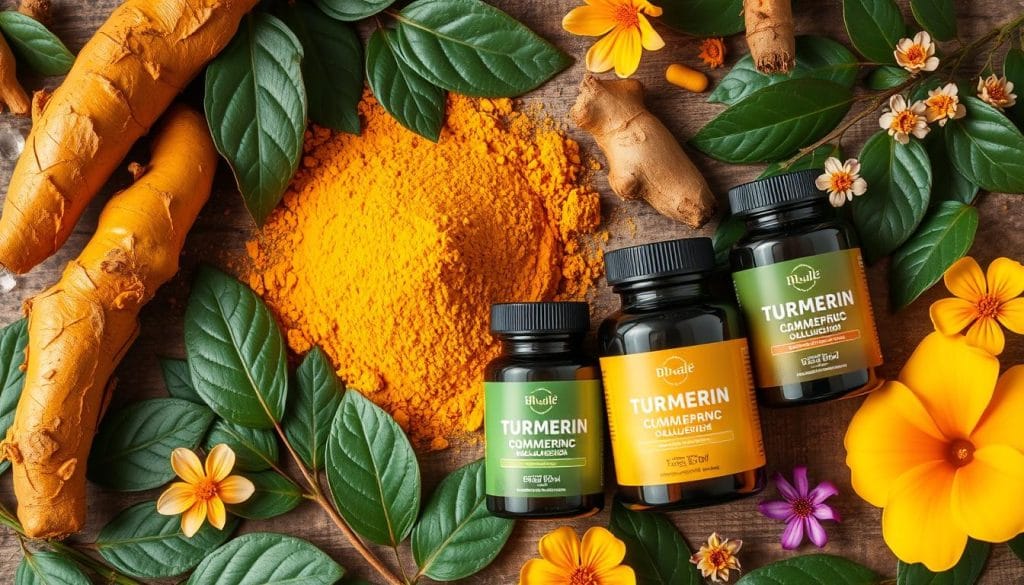
Quick recommendation: If you are more of a shots woman, this could be your go to! The Turmeric Co.
Reducing chronic inflammation is key for feeling better during menopause. Curcumin stops inflammation-causing molecules. This helps with joint pain, muscle soreness, and heart health.
Turmeric also helps with mood swings and emotional balance. Adding turmeric to your diet can offer many benefits during menopause.
Turmeric and Immune Support for Menopausal Women
Menopause can weaken your body’s fight against infections. Adding turmeric to your diet can be a big help. It’s known for its ability to fight off harmful microbes.
Make turmeric a part of your daily routine to keep your health in check. Its strong anti-microbial properties help guard against infections that are more common during menopause. By doing so, you support your body’s natural defenses and manage your health better during this important time.
Practical Ways to Include Turmeric in Your Diet
Adding turmeric to your meals can be simple and tasty. It helps manage menopause symptoms. You can start with curcumin supplements. They give you a strong dose of curcumin, turmeric’s key ingredient.
Love to cook? There are many turmeric recipes to try. Add it to soups, stews, and curries for extra flavor and health perks. Turmeric tea or golden milk is also great for relaxing.
Another easy way is to sprinkle turmeric on roasted veggies or in salad dressings. Turmeric fits well in many dishes. Feel adventurous? Try it in baked goods or smoothies.
Whether you use supplements or try recipes, turmeric is good for you during menopause. Find what works best for you and enjoy the benefits of this golden spice.
Recipes Featuring Turmeric for Menopausal Relief
Turmeric can be a game-changer in your anti-inflammatory diet, especially for managing menopausal symptoms. Adding turmeric-infused meals to your daily routine is easy. Here are some nutritious recipes to help you enjoy the benefits of this golden spice.
This soothing beverage is great as a nighttime ritual to help with sleep and relaxation. Warm up some milk (or a non-dairy alternative) and stir in a teaspoon of turmeric powder. Add a pinch of black pepper for better absorption and a touch of honey for sweetness. This drink supports an anti-inflammatory diet and is a comforting way to end your day.
2. Turmeric Vegetable Stir-Fry
Make your meals colorful and flavorful with this easy stir-fry recipe. Sauté your favorite vegetables like bell peppers, broccoli, carrots, and onions in olive oil. Sprinkle turmeric powder, along with ginger and garlic, for extra health benefits. Serve over brown rice or quinoa for a complete, nutritious meal.
3. Turmeric-Chickpea Salad
This refreshing salad is great for lunch or a light dinner. Mix cooked chickpeas with chopped cucumbers, tomatoes, and red onions. Dress with olive oil, lemon juice, and a teaspoon of turmeric powder. This salad is delicious, packed with fiber and protein, and keeps you feeling full.
By adding these turmeric-infused meals to your routine, you can create a diet that supports your body during menopause. These recipes are simple yet effective ways to enjoy turmeric’s powerful benefits.
Potential Side Effects and Precautions
Thinking about adding turmeric to your daily routine? It’s important to know the possible side effects and precautions. Turmeric is usually safe, but some people might have bad reactions. Always follow the recommended curcumin dosage to avoid problems.
Turmeric can interact with certain medicines, like blood thinners or diabetes drugs. It’s smart to talk to your doctor before starting turmeric, especially if you’re dealing with menopause symptoms.
Knowing how to use turmeric safely is key. Some might get stomach issues or allergies. Staying within the safe curcumin dosage helps avoid these issues and lets you enjoy turmeric’s benefits.
Even though turmeric has many good points, it’s vital to focus on your health. Following safety guidelines and getting medical advice helps you use natural remedies wisely during menopause.
Conclusion
Menopause is a big change in life, and finding natural ways to handle symptoms is key. Turmeric is known for its anti-inflammatory and antioxidative powers. It can help with hot flashes, mood swings, bone health, and sleep.
Adding turmeric to your daily routine is a simple yet powerful step. A holistic health approach is important. This includes eating well, exercising regularly, and taking care of your emotional health.
Menopause is a natural part of life, marking a new start. Seeing the positive side of change and using turmeric can help. This way, you embrace a healthier and more balanced life.
Quick Recommendation: This blog tries to offer useful products that might help support you in your menopause journey. If you are looking for a recommendation, please follow this link. Turmeric and Ginger Supplements