
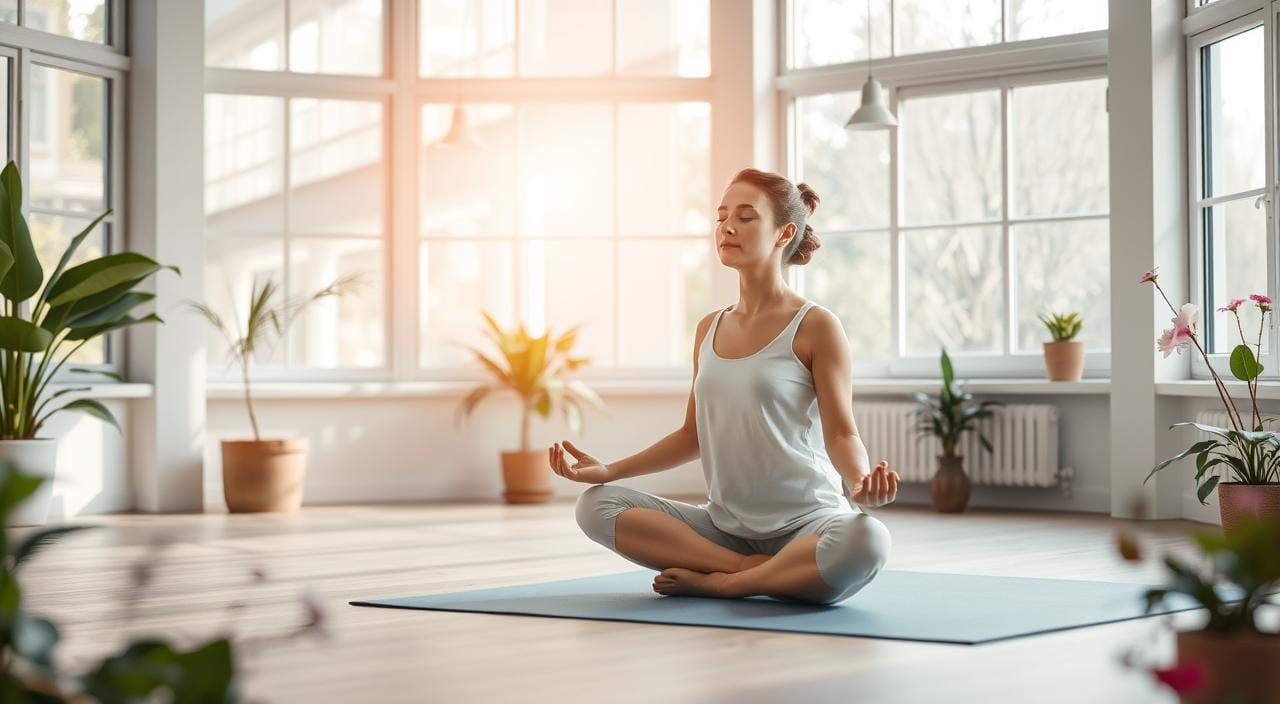
Did you know that over 85% of women experience hot flashes during menopause? This statistic highlights the need for effective symptom management. Mindfulness meditation for menopause has proven to be a powerful tool. It offers relief from symptoms without the need for medication.
By focusing on the present moment, mindfulness meditation can improve your emotional and physical health. It’s a natural way to manage menopause symptoms like hot flashes, mood swings, and sleep disturbances. Whether you’re new to mindfulness or looking to deepen your practice, its benefits during menopause can be transformative.
Key Takeaways
- Over 85% of women experience hot flashes during menopause, highlighting the need for effective symptom management.
- Mindfulness meditation for menopause is a natural, non-invasive, and medication-free method of relief.
- This practice can help reduce common symptoms such as hot flashes, mood swings, and sleep disturbances.
- Mindfulness meditation focuses on living in the present moment, promoting emotional and physical well-being.
- Incorporating mindfulness into your routine can significantly improve your overall quality of life during menopause.
Understanding Menopause
Menopause is a pivotal moment in a woman’s life, signaling the end of menstrual cycles. It’s a natural transition where hormonal changes occur. Grasping these changes can help you navigate this phase more smoothly.
The menopause journey starts with perimenopause, a period of irregular periods and hormone level fluctuations. This stage can last years, introducing the first signs of menopause. Symptoms like hot flashes, night sweats, and mood swings become more common as estrogen and progesterone levels drop.
After perimenopause, menopause officially begins with 12 consecutive months without a period. Hormonal shifts during this time can cause physical and emotional symptoms. Common signs include vaginal dryness, sleep issues, and weight gain.
Postmenopause follows, where symptoms may lessen or evolve. It’s crucial to note that each woman’s experience with menopause is unique. Understanding these stages can prepare you for the impact on your daily life.
Introduction to Mindfulness Meditation
Mindfulness meditation is an ancient practice aimed at grounding you in the present moment. It enhances awareness and tranquility. Originating in Buddhist traditions, it focuses on being present and accepting thoughts and feelings without judgment. This practice is especially helpful during menopause, offering natural stress and anxiety relief.
Understanding the basics of mindfulness meditation is crucial. Start by finding a quiet, comfortable spot to sit or lie down. The main goal is to concentrate on your breath, gently returning your mind when it strays. This foundational technique, called breath awareness, is one of the simplest for beginners.
Adding basic grounding exercises can make mindfulness easier to start. Simple methods include feeling your feet on the ground or noticing your body’s sensations. These techniques help keep your focus, making meditation accessible and effective, especially for newcomers.
To begin, here are some easy meditation techniques for beginners:
- Body Scan: Slowly scan through each part of your body, paying attention to any tension or discomfort.
- Guided Imagery: Visualize a peaceful scene, such as a beach or forest, engaging all your senses to enhance the experience.
- Mantra Repetition: Silently repeat a calming word or phrase to maintain focus and reduce mind chatter.
Regularly practicing these techniques can help you develop a resilient and calm mind. This is crucial during menopause. By embracing these mindfulness meditation basics, you can better navigate this life stage with ease and well-being.
Why Mindfulness Meditation is Important During Menopause
Mindfulness meditation offers significant benefits for managing stress during menopause. It helps reduce stress hormones like cortisol, leading to a calmer and more balanced state. This is crucial during the transition period.
It also plays a key role in emotional regulation. Hormonal changes in menopause can cause mood swings and increased emotional sensitivity. Regular meditation helps manage these shifts, promoting emotional stability.
Furthermore, mindfulness meditation benefits both mind and body. It can lower blood pressure, improve heart health, and boost immunity. These effects contribute to a smoother menopausal journey.
To illustrate the multiple benefits of mindfulness meditation during menopause:
| Aspect | Benefits |
|---|---|
| Stress Hormones | Reduces cortisol levels |
| Emotional Stability | Improves emotional regulation |
| Physical Health | Improves heart health and immunity |
| Mental Clarity | Promotes focus and reduces anxiety |
Adding mindfulness meditation to your routine can significantly impact your life. By staying present, you can overcome many of the challenges menopause brings. This leads to a more balanced and fulfilling existence.
Reducing Stress and Anxiety with Mindfulness Meditation
Menopause often brings heightened levels of stress and anxiety. However, mindfulness meditation offers effective ways to manage these symptoms. By integrating various techniques for stress relief into your routine, you can experience a significant reduction in anxiety. These practices focus on bringing your attention to the present moment, promoting relaxation, and easing tension.
One of the most effective anxiety reduction strategies is deep breathing. This simple yet powerful technique involves taking slow, deep breaths to lower cortisol levels, thereby reducing stress. Next time you feel overwhelmed, take a moment to practice this calming exercise.
Another valuable approach involves calming mindfulness exercises such as body scan meditation. This exercise encourages you to mentally scan your body for areas of tension, helping you to release stress. By repeatedly practicing this technique, you can cultivate a greater awareness of how stress manifests physically and learn to alleviate it more effectively.
Here’s a quick overview of different mindfulness techniques and how they benefit you:
| Mindfulness Technique | Benefit |
|---|---|
| Deep Breathing | Reduces cortisol levels and promotes relaxation |
| Body Scan Meditation | Identifies and eases physical tension |
| Mindful Walking | Encourages present-moment awareness and reduces anxiety |
Integrating these mindfulness techniques into your daily routine can have a profound impact on your mental well-being. It is essential to practice regularly to experience the full benefits. Whether it’s through deep breathing, body scan meditation, or other calming mindfulness exercises, you can find the right approach to manage stress and anxiety effectively during menopause.
Improving Sleep Quality Through Mindfulness Meditation
Insomnia and sleep disturbances are common during menopause. Fortunately, mindfulness meditation can greatly enhance sleep quality. By adopting better sleep practices, you can create a relaxing environment for rest.
Meditation before bed is a powerful tool against insomnia. It calms the mind, reduces stress, and sets a consistent, soothing routine. Just a few minutes each night can lead to a restful sleep.
Here are some mindful meditation techniques to improve sleep:
- Find a quiet, comfortable space free of distractions.
- Sit or lie down in a relaxed position.
- Close your eyes and focus on your breath, inhaling deeply and exhaling slowly.
- Visualize a calming scene or repeat a soothing mantra.
- Let go of any intrusive thoughts by acknowledging them and gently redirecting your focus back to your breath or visualization.
By incorporating these restful sleep tips into your routine, you can significantly improve your sleep. Regular meditation for insomnia can lead to better sleep quality. This helps you wake up feeling refreshed and energized.
Managing Mood Swings and Emotional Well-being
Navigating menopause can be tough, especially when it comes to emotional health. Mindfulness meditation offers effective techniques for coping with mood swings and maintaining balance. Understanding these methods can help you enhance your emotional well-being.
Breathing exercises are an excellent starting point. Deep, controlled breaths help calm the mind and reduce stress levels. By focusing on your breath, you can bring your attention to the present moment, which aids in managing mood swings.
Journaling is another powerful tool. Writing down your thoughts and feelings allows you to process emotions and offers a sense of relief. Regular journaling fosters self-awareness and provides insights into triggers that may disrupt your emotional balance.
Engaging in mindful awareness practices, such as body scans and meditation sessions, can further promote emotional health during menopause. These practices encourage you to observe your thoughts without judgment and cultivate a sense of inner peace.
By incorporating these mindfulness strategies, you can effectively manage mood swings and enhance your overall emotional well-being. This ensures a smoother transition through menopause.
- Breathing Exercises
- Journaling
- Mindful Awareness Practices
| Technique | Benefit |
|---|---|
| Breathing Exercises | Reduce stress and maintain balance |
| Journaling | Process emotions and gain insights |
| Mindful Awareness Practices | Foster inner peace and emotional stability |
Enhancing Physical Health with Mindfulness Meditation
Mindfulness meditation brings numerous physical benefits that can greatly improve your health during menopause. By making these practices a part of your daily routine, you can experience lower blood pressure, reduced chronic pain, and better overall health. These outcomes are significant for your well-being.
Research indicates that regular mindfulness meditation can lower blood pressure. This is crucial since high blood pressure is common during menopause, threatening your heart health. By incorporating mindfulness and body awareness into your daily routine, you can effectively manage this risk.
Mindfulness meditation also offers relief from chronic pain, a common issue for menopausal women due to hormonal changes. This practice promotes relaxation and helps manage pain more effectively. It’s a key part of holistic health practices.
For a comprehensive approach to managing menopausal symptoms, combining yoga with mindfulness meditation is beneficial. Certain yoga poses, such as Tree Pose and Legs-Up-The-Wall Pose, can help with hot flashes and mood swings, as discussed in this Purely Wellness article. These poses, when combined with breathing techniques, enhance the physical benefits of meditation.
| Healthy Practices | Physical Benefits |
|---|---|
| Mindfulness Meditation | Lowered blood pressure, reduced chronic pain, improved overall health |
| Yoga Poses (e.g., Tree Pose, Legs-Up-The-Wall Pose) | Alleviates hot flashes, balances hormones, increases relaxation |
| Breathing Techniques (e.g., Deep Breathing, Ujjayi Breathing) | Reduces stress, improves lung capacity, enhances mental clarity |
By integrating these holistic health practices into your lifestyle, you can significantly enhance your physical health during menopause. Embracing mindfulness and body awareness through consistent practice can lead to a healthier, more balanced state of being.
Developing a Personal Mindfulness Meditation Practice
Creating a customized meditation routine can be a rewarding part of your personal mindfulness journey during menopause. Success hinges on building meditation habits that are both sustainable and adaptable to your lifestyle. Here’s how to craft a meditation practice that’s uniquely yours:
-
Set Attainable Goals:
Begin with small, achievable objectives. Start with a few minutes of mindfulness daily and gradually increase as you grow more comfortable. -
Choose a Comfortable Space:
Identify a quiet, cozy spot in your home for meditation, free from distractions. Tailoring your meditation space can greatly enhance focus and calm. -
Establish a Routine:
Consistency is key in developing meditation habits. Meditate at the same time each day, whether it’s early morning or before bed. -
Incorporate Mindfulness into Daily Activities:
Mindfulness isn’t limited to set meditation times. Practice mindful breathing, walking, or eating to integrate mindfulness into your daily routine.
By gradually adding these elements to your mindfulness journey, you’ll create a practice that meets your needs during menopause and enhances your overall well-being.
Incorporating Mindfulness into Daily Life
Adding mindfulness to your daily routine can greatly enrich your life. It helps you live more centered and balanced. Here are some practical tips to make mindfulness a part of your daily life.
- Start Your Day with Intention: Begin by taking a few deep breaths and setting a positive intention for the day. This simple act sets a mindful tone for the day ahead.
- Mindful Eating: Enjoy each bite by focusing on flavors, textures, and smells. This mindful approach enhances your mealtime experience and aids digestion.
- Use Mindfulness Cues: Link mindfulness to daily activities. For instance, use handwashing as a cue to pause and breathe deeply, refocusing your mind.
- Take Mindful Breaks: Take short breaks to practice mindful breathing. These moments can reduce stress and boost concentration.
- Evening Reflection: Reflect on your day with gratitude and acknowledge mindfulness moments. This practice helps you unwind and appreciate the day’s experiences.
Adding meditation to your routine is achievable. Begin with just five minutes a day and gradually increase as you become more comfortable. Consistency is crucial for mindfulness to become a natural part of your life.
Below is a simple table to illustrate how you can plan your daily mindfulness habits:
| Time of Day | Mindfulness Activity |
|---|---|
| Morning | Set Intentions |
| Breakfast | Mindful Eating |
| Midday | Mindful Break |
| Afternoon | Use Mindfulness Cues |
| Evening | Evening Reflection |
By following these mindful living tips, you can enhance your awareness and peace in daily life. Introducing these small practices can significantly improve your well-being.
Success Stories: Women Benefiting from Mindfulness Meditation During Menopause
Women across the United States share their real-life experiences with mindfulness meditation during menopause. Their testimonials highlight the profound benefits of mindfulness. These personal victories show how mindfulness can transform well-being and quality of life.
To truly appreciate the power of mindfulness meditation, let’s delve into some inspiring accounts:
- Lisa’s Journey: Lisa was overwhelmed by mood swings and anxiety during menopause. Daily mindfulness sessions significantly reduced her stress and brought calm.
- Maria’s Story: Maria struggled with insomnia. A consistent mindfulness practice improved her sleep, leading to more restful nights and days.
- Kim’s Achievement: Kim faced physical discomfort daily. Through meditation, she found relief and better symptom management.
These stories highlight mindfulness meditation’s potential for women during menopause. Additional insights follow:
| Individual | Challenge | Mindfulness Meditation Outcome |
|---|---|---|
| Susan | Hot Flashes | Reduced frequency and intensity |
| Janet | Anxiety | Increased emotional stability and calmness |
| Harper | Weight Gain | Better weight management through mindful eating |
Conclusion
As you move through menopause, mindfulness can greatly enhance your well-being. Adding mindfulness meditation to your daily life offers numerous benefits. These include less stress, better sleep, and emotional balance. This approach helps you face menopause’s changes with a positive and balanced mindset.
It’s vital to understand the mind-body connection for better health and emotional well-being. Mindfulness meditation helps manage mood swings and improves physical health. As you grow your mindfulness practice, you’ll find it changes your menopause experience. It gives you the tools for empowered living.
Being mindful isn’t just about meditation; it’s about being present in all aspects of life. By following the steps in this article, you prepare for a more mindful menopausal transition. Remember, the power to change your menopause journey is in your hands. Start today to embrace a mindful, balanced, and empowered approach to this life phase.