
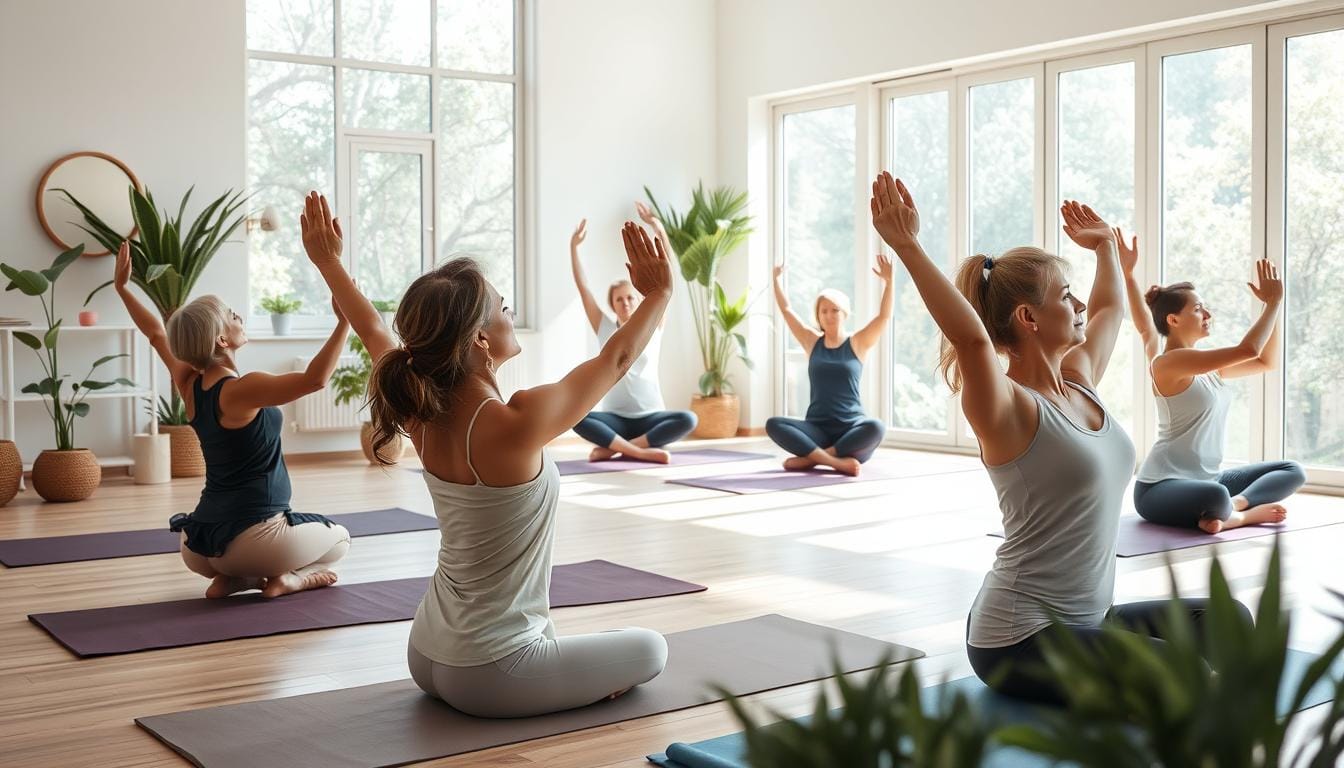
Going through menopause can be tough, but yoga might help. It’s a natural way to manage symptoms. Yoga balances hormones and boosts your overall health. Let’s look at how yoga poses can ease your menopause journey.
Key Takeaways
- Yoga can be a supportive practice during menopause.
- Regular yoga sessions may help in managing menopause symptoms.
- Yoga aids in balancing hormones.
- Practicing yoga promotes overall well-being.
- Understanding the right poses can enhance symptom relief.
Understanding Menopause and Its Symptoms
Menopause is a big change in a woman’s life. It’s when hormonal shifts cause various symptoms. Your body stops making eggs, leading to less estrogen and progesterone. These changes cause many common menopause symptoms.
Hot flashes are a well-known symptom. They are sudden heat waves that can make you sweat and feel red. They often happen on your face and upper body. Night sweats, which happen while you’re sleeping, can also disrupt your sleep and make you tired.
Mood swings are another common symptom. Hormonal changes can make you feel irritable, anxious, or even depressed. It’s key to recognize these emotional shifts and get help if you need it.
Knowing about these symptoms and the hormonal shifts behind them can make this tough time easier. It can give you more confidence as you go through it.
Why Yoga is Beneficial During Menopause
Adding yoga to your daily routine can bring many benefits during menopause. It helps reduce stress, which is key in managing symptoms. Yoga also stabilizes your mood and eases anxiety.
Yoga’s effect on hormonal balance is another reason it’s good during menopause. Certain poses and breathing techniques can help regulate hormones. This can reduce symptoms like hot flashes and night sweats.
Menopause can mess with your sleep, making you tired and irritable. Yoga can help improve your sleep quality. Its relaxation techniques and gentle stretches promote a restful night’s sleep.
Yoga offers a holistic way to manage menopause. It connects your mind and body, helping you take charge of your health. Regular yoga practice can make menopause a more manageable and positive time.
How to Start a Yoga Practice During Menopause
Starting a yoga practice during menopause can be a life-changing experience. It’s key to start with gentle yoga routines that meet your needs. As a beginner, here are some tips to help you begin your wellness journey:
First, understand your physical limits. Gentle yoga that fits your flexibility and endurance is crucial. Choose poses and stretches that are easy on your body, helping you relax and reduce stress.
“Listening to your body is crucial—never push beyond your comfort zone. This is a time to nurture, not challenge, your body.”
Getting help from a qualified yoga instructor is very helpful. A teacher who knows about yoga for women in menopause can adjust your routine to fit you. They ensure your practice is safe and consistent.
Add deep breathing exercises to your yoga to boost its benefits. Regular practice can improve your well-being, lessen menopause symptoms, and enhance your health. Aim for a yoga practice that’s gentle and supports you through menopause smoothly.
Top Yoga Poses to Relieve Menopause Symptoms
Menopause can cause many uncomfortable symptoms. But, certain yoga poses can help. These poses can improve hormone balance and mental focus. They can ease many menopausal problems. Here are some top yoga poses to consider:
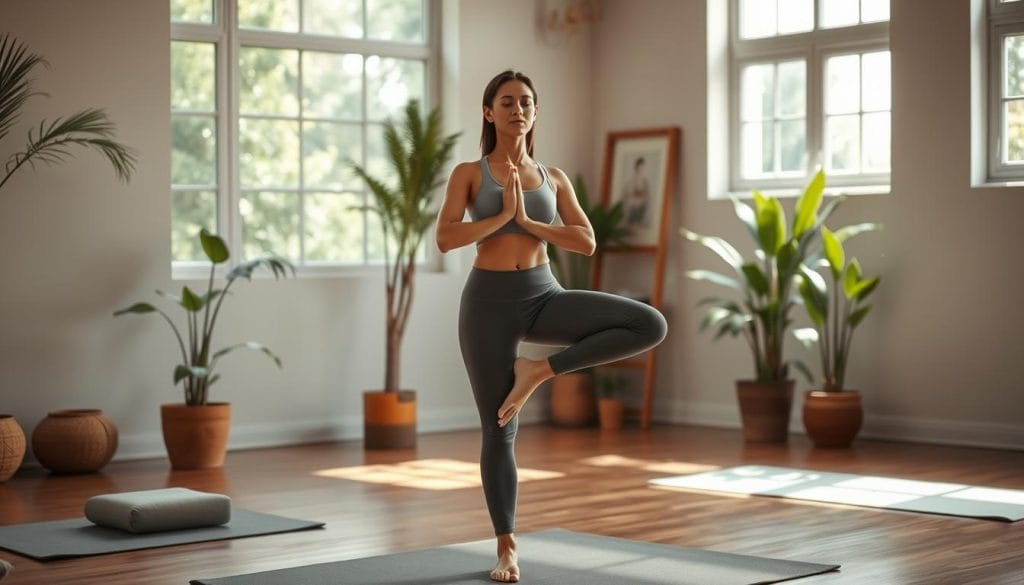
1. Balance with Tree Pose (Vrksasana):
Tree pose is great for hormone balance and mental clarity. It makes you feel stable and calm. This helps reduce stress, a common menopause symptom.
2. Calm with Butterfly Pose (Baddha Konasana):
Butterfly pose opens the hips and groin, easing physical tension. It boosts blood flow and helps with menopause symptoms. This makes it a great pose for comfort during hormonal changes.
3. Restore with Legs-Up-The-Wall Pose (Viparita Karani):
Legs-Up-The-Wall pose is calming and restorative. It helps regulate hormones and eases menopause symptoms. It’s a great pose for relaxation and balance.
4. Relieve Stress with Cat-Cow Pose (Marjaryasana-Bitilasana):
Cat-Cow pose stretches and warms the spine. It helps with back pain and tension. It’s good for menopause relief by improving spinal flexibility and blood flow.
Add these yoga poses to your routine to manage menopause symptoms. They offer physical and mental benefits. These benefits help with hormone balance and mental clarity, making this life stage easier.
Breathing Techniques to Complement Your Yoga Practice
Breathing techniques, or pranayama, are key to improving your yoga practice, especially during menopause. They help you relax deeply and reduce stress. By adding pranayama to your routine, you boost both your body and mind.
Deep breathing is a great technique. Sit comfortably, close your eyes, and breathe in slowly through your nose. Let your belly rise. Hold, then breathe out slowly through your mouth. This simple act can calm you down fast.
Alternate nostril breathing is another good method. It balances your nervous system. Sit right, block your right nostril with your thumb, and breathe in through the left. Then, block the left with your ring finger, breathe out through the right, and do it again. This can make you feel very relaxed.
Ujjayi breathing, or the “ocean breath,” is also helpful. It helps you breathe steadily during yoga. To do it, breathe in through your nose with your throat a bit closed, making a soft sound. Then, breathe out the same way.
“The mindful practice of pranayama can lead to noticeable improvements in your overall sense of well-being,” says Dr. Nancy Lonsdorf, a holistic health expert.
Adding these pranayama techniques to your daily life can help you manage stress better. It also makes your yoga practice better. The secret to getting the most out of these exercises is to practice regularly and stay mindful.
Mindfulness and Meditation in Yoga for Menopause
Adding mindfulness and meditation to your yoga can really help with menopause symptoms. These practices boost emotional health and brain function. They’re great for managing anxiety and staying focused, which many women struggle with during menopause.
Mindfulness keeps you in the moment, which can be very calming. By focusing on your breath and doing guided meditations, you can handle anxiety better. It helps you stay calm and centered.
Also, meditation is good for your brain. It can make you more focused and clear-headed. This is helpful during menopause when hormones can affect your mind. It helps you feel more in control and mentally sharp.
Precautions and Modifications for Yoga During Menopause
Starting a safe yoga practice during menopause is key for your well-being. It helps manage symptoms well. By being body-aware, you know your limits and avoid injuries.
Yoga changes are vital for your menopause body. They keep you comfortable and safe in each pose. Using props like blocks or straps can help with stretches and balance.
Preventing injuries is a big part of safe yoga. Always talk to a doctor before starting yoga, especially with health issues. They can tell you which poses to skip or change.
It’s important to listen to your body and not push too hard. By making yoga changes and paying attention to your body, you can enjoy yoga’s benefits. This way, you stay healthy and avoid risks during menopause.
“Yoga takes you into the present moment, the only place where life exists.” – Patanjali
Standing Poses to Build Strength and Stability
Menopause brings many changes, both physical and emotional. Adding standing yoga poses to your routine can help a lot. These poses improve balance, boost muscular strength, and support bone health. All these are key for getting through this time.
Poses like Warrior II and Tree Pose can really help with stability and strength. Warrior II, for example, works many muscles. This not only helps with balance but also makes your muscles stronger. It makes your legs, back, and arms strong, helping you avoid falls and injuries.
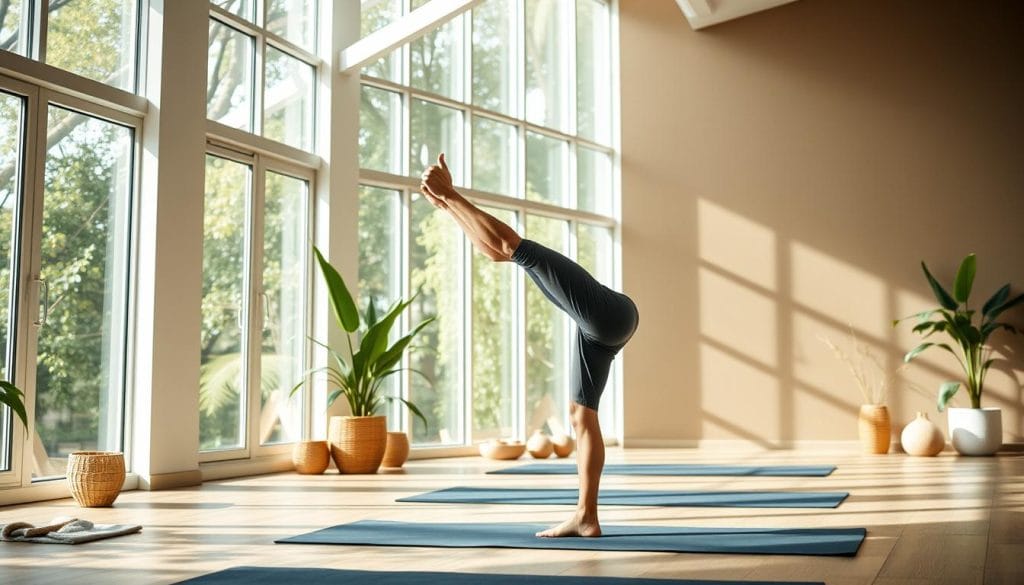
Standing poses like Tree Pose or Chair Pose also boost energy. They need focus and steady breathing. This helps your body’s metabolism and clears your mind. Regular practice can also make you feel more confident and stable.
“Standing poses are the base for a balanced and strong body,” says yoga expert Adriene Mishler. “They improve bone health and energy levels.”
By doing these standing poses, you make your yoga better and strengthen your mind and body. They help you balance, get stronger, and improve bone health. This leads to more energy during menopause.
Seated Poses to Promote Relaxation
Seated yoga postures are great for easing tension and calming the mind during menopause. They help with flexibility, which can decrease with age. Adding these poses to your routine can greatly benefit your mental and physical health.
The cross-legged pose, or Sukhasana, is excellent for relaxation. It lets you focus on your breathing, leading to a calm mind and relaxed body. You’ll also notice your flexibility improving and feel more tranquil.
The Seated Forward Bend, or Paschimottanasana, stretches your spine and hamstrings. It’s great for reducing stress and boosting flexibility. Deep breathing in this pose can lead to deep relaxation and a balanced mind.
The Bound Angle Pose, or Baddha Konasana, is great for your inner thighs. It’s simple yet effective. Regular practice can ease hip and groin tension, offering a soothing stress release.
“Practicing seated yoga postures regularly will not only support your physical health but also promote a lasting calm mind, especially pertinent during the transitional phase of menopause.”
Adding these seated yoga postures to your daily routine can be a calming ritual. It helps ease tension, improves flexibility, and makes menopause more manageable and peaceful.
Restorative Poses for Deep Relaxation
Restorative yoga is a peaceful place to reduce stress and find deep relaxation. These poses are gentle and supportive, great for menopause. They help release tension and calm the mind, offering a break from daily stress.
Restorative yoga lets you fully relax. Poses like Child’s Pose or Supta Baddha Konasana use props for support. This support helps release stress and creates a calm atmosphere, easing menopause challenges.
Adding restorative yoga to your routine rejuvenates your body. Spending time on these poses creates a calm oasis. Regular practice improves your physical and mental health, bringing balance and peace.
“Restorative yoga is the perfect antidote to a busy lifestyle. It allows the body and mind to rest deeply, facilitating profound relaxation and stress release.”
For deep relaxation and stress release, restorative yoga is a great tool. It creates a peaceful space, rejuvenating body and mind. Its benefits extend far beyond the yoga mat.
Conclusion
Yoga is a great way to support your wellness during menopause. It helps you deal with the physical and emotional changes. Yoga builds strength, improves flexibility, and brings calm through breathing and meditation.
Your yoga journey is special and personal. Listen to your body and adjust your practice as needed. Yoga is more than poses; it’s about being mindful and staying present. It’s a chance to reset, recharge, and reconnect with yourself.
Being part of a supportive community makes yoga even better. Local classes or online groups offer encouragement and motivation. Sharing experiences and tips with others can make your journey more rewarding. Yoga can be a powerful ally at any stage of life, including menopause.