

Did you know that around 75% of women experience hot flashes during menopause? This shows how big of an impact this stage can have on your health. Menopause brings big changes in hormones that affect your mood, weight, and health. So, making the right food choices is key to feeling better.
Your diet is very important for balancing hormones and making the transition smoother. Eating foods high in calcium, vitamin D, and healthy fats can help with symptoms like hot flashes and mood swings. Also, fruits, vegetables, and whole grains are great for your health. But, some foods and drinks can make symptoms worse and should be avoided.
Discover our quick recommendations for products designed to support menopause and enhance your overall well-being here. This book, Galveston Diet Cookbook, is your passport to feeling your best during menopause and beyond, offering a scientifically backed approach to nutrition that focuses on reducing inflammation and balancing hormones
Key Takeaways
- Menopause can significantly impact your health, mood, and weight.
- A nutrient-rich diet can help manage symptoms like hot flashes and mood swings.
- Foods high in calcium, vitamin D, and healthy fats are beneficial during menopause.
- Fruits, vegetables, and whole grains should be a staple in your diet.
- Certain foods and beverages should be avoided to ease menopausal symptoms.
Understanding Menopause and Nutrition
Menopause is when you stop getting your period and can’t have kids anymore. It usually happens between 45 and 55 years old. This time brings big changes to your hormones. Changing your diet can help manage symptoms.
During menopause, you need more calcium and vitamin D to keep your bones strong. A balanced diet also helps fight heart disease. Eating the right foods is key for your bones and heart.
Eating right can also help with weight issues, common in menopause. Eating foods that support your hormones can help you feel better. Foods high in calcium, vitamin D, and healthy fats are especially good.
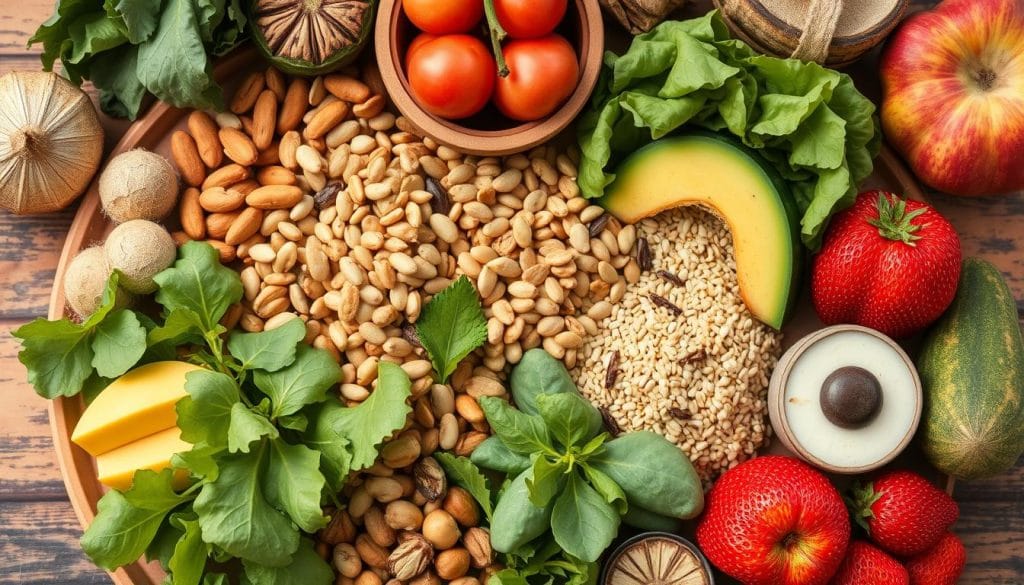
Good nutrition is also important for your mind and mood during menopause. With the right diet, you can handle these changes better. It supports your body and improves your life quality.
Foods Rich in Calcium and Vitamin D
As you go through menopause, keeping your bones strong is key. This is because the risk of osteoporosis goes up. Eating foods high in calcium and getting enough vitamin D is vital for your bones.
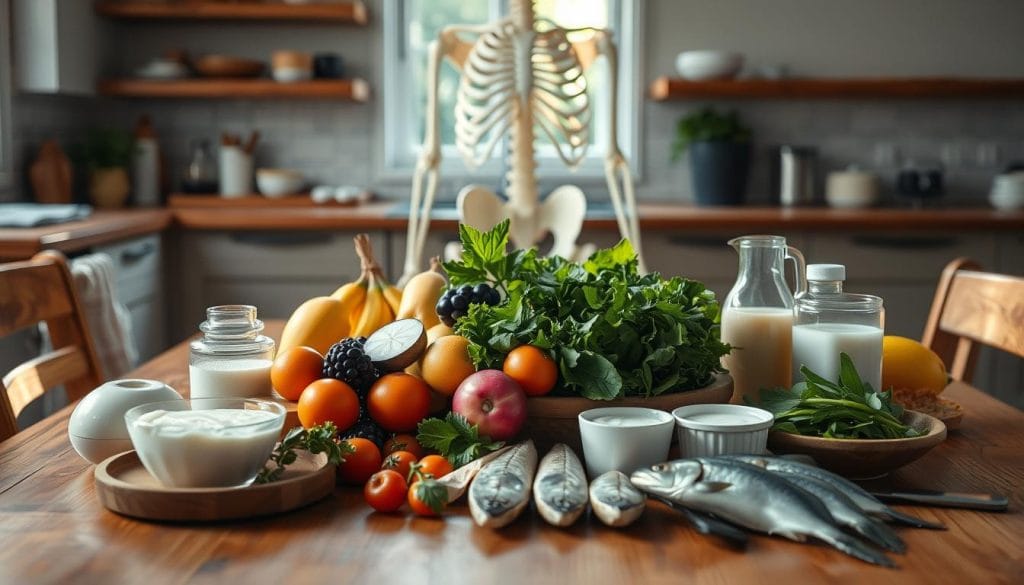
Dairy products like milk, cheese, and yogurt are great for calcium. If you prefer plants, kale, broccoli, and almonds are good choices. Also, orange juice and cereals that are fortified can help meet your calcium needs.
Vitamin D is also important for your bones. It helps your body use calcium. You can get vitamin D from sunlight, but it’s hard in winter or where it’s cloudy. So, eating foods like salmon, mackerel, egg yolks, and fortified milk is key. Sometimes, you might need vitamin D supplements, especially if you’re over 50.
Healthy Fats: Why You Need Them
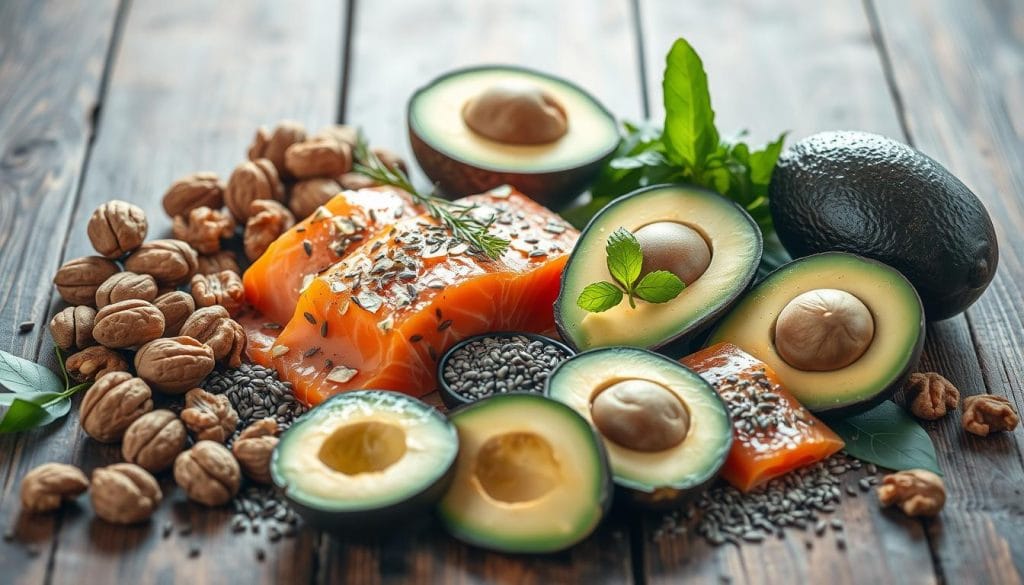
Adding healthy fats to your diet is key for heart health and overall well-being. Unlike saturated fats, which can harm your cholesterol, healthy fats offer many benefits. Omega-3 fatty acids, found in fatty fish like salmon and mackerel, are great for reducing inflammation and lowering disease risk.
Discover our quick recommendations for products designed to support menopause and enhance your overall well-being here. This book, Galveston Diet Cookbook, is your passport to feeling your best during menopause and beyond, offering a scientifically backed approach to nutrition that focuses on reducing inflammation and balancing hormones
Monounsaturated fats, found in avocados, nuts, and seeds, also boost heart health. They help improve your cholesterol levels, cutting down heart disease risk. Switching to these healthier fats can greatly improve your health.
Your hormonal health also benefits from healthy fats. They help with hormone production, leading to better mood and reduced menopause symptoms. Make sure to include monounsaturated fats and omega-3 fatty acids in your meals. Your body will appreciate it!
Plant-Based Diet Benefits
Switching to a plant-based diet can greatly improve your health. It’s rich in fruits, veggies, nuts, seeds, oils, whole grains, legumes, and beans. This diet can make your heart healthier and help you lose weight.
Vegetarian diets are full of nutrients and have fewer calories and fats. For women going through menopause, plant foods can help balance hormones. Eating a variety of plant proteins ensures you get all the amino acids you need.
The benefits of a vegetarian diet are many. It’s good for your heart and packed with nutrients. Try adding lots of colorful, nutrient-rich plants to your meals for a healthier lifestyle.
Fiber-Rich Foods for Digestive Health
As you go through menopause, keeping your digestive health in check is key. Adding dietary fiber to your meals can really help. It’s great for digestion, especially when your metabolism slows down.
Whole grains, legumes, fruits, and veggies are full of fiber. They help you feel full, which can stop you from eating too much. This makes it easier to keep a healthy weight. Plus, they can help with constipation, a common problem during menopause.
A diet high in fiber also has other benefits. It can lower your risk of heart disease and improve your cholesterol levels. This is good for your overall health. To get the most benefits, eat a variety of fiber-rich foods like whole grains and legumes every day.
Eating foods rich in fiber is good for your digestion and overall health. Whole grains offer many benefits, from helping with weight to easing constipation. Use dietary fiber to take control of your health during menopause.
Foods to Avoid During Menopause
During menopause, some foods can make symptoms worse. This includes hot flashes, mood swings, and weight gain. Knowing which foods to avoid is important.
Caffeine is a big problem. It can make hot flashes worse and disrupt sleep. Try herbal teas instead of coffee or tea.
Sugar is another issue. Foods and drinks with a lot of sugar can cause mood swings and tiredness. Eating less sugary stuff can help keep your energy steady.
Processed foods, especially those with a lot of salt and fat, can cause bloating. Watching what you eat can help manage these symptoms. Also, alcohol can make hot flashes and sleep problems worse. Drinking in moderation is important.
It’s key to pay attention to how certain foods affect you. Making smart food choices can help ease menopause symptoms. This can improve your overall health and well-being.
The Role of Phytoestrogens
Phytoestrogens are compounds found in plants that act like estrogen in our bodies. They are in foods like whole grains, flax seeds, and soy products. Eating these foods can help balance hormones, especially during menopause.
Eating foods rich in phytoestrogens, like soy, might ease menopause symptoms. Research is still going on, but some studies show benefits. It’s important to eat them in moderation to avoid any negative effects.
Adding plant estrogens to your diet is a natural way to handle menopause. Foods like soy and flax seeds can support your hormonal health. This makes them a good choice for your daily meals.
Hydration: Why It Matters
Staying hydrated is key, especially during menopause. Drinking water helps keep your body temperature stable, which is great for hot flashes. It also helps with digestion and can make you feel fuller, preventing overeating.
Experts suggest drinking eight 8-ounce glasses of water daily. But, your needs might be different. It’s important to avoid caffeinated and alcoholic drinks as they can worsen menopause symptoms and cause dehydration.
Supplements: When Diet Alone Isn’t Enough
Even with a balanced diet, it can be hard to get all the nutrients you need during menopause. This is where supplements come in. Calcium and vitamin D supplements are key for keeping your bones strong.
Omega-3 fatty acids and B vitamins also offer great support. It’s important to talk to your healthcare provider about these supplements. They can help figure out if they’re right for you and if they might interact with your medications.
Adding these supplements to your daily routine can really boost your health during menopause. But, always check with your doctor before starting any new supplement. It’s crucial for your safety and well-being.
Lifestyle Changes to Complement Your Diet
Menopause brings many changes, but making lifestyle changes can help a lot. Regular physical activity is key for a healthy weight, managing stress, and getting quality sleep. Activities like walking, swimming, or cycling can boost your health.
Adding stress-reduction techniques like meditation or yoga to your day can be very helpful. These practices help manage menopause symptoms and improve your mental and emotional state. Finding calm moments can also help you handle stress better.
Good sleep habits are also crucial. Having a regular sleep schedule and a calming bedtime routine can improve your quality sleep. Avoiding caffeine and electronics before bed can also help. By focusing on these areas, you’re taking big steps to make menopause easier.
Conclusion
Menopause is a big change in life, and handling it well needs smart choices. By picking the right foods, you can lessen many symptoms. Foods high in calcium and vitamin D help your bones. Healthy fats keep hormones balanced, and plant-based foods are full of nutrients.
Foods rich in fiber help with digestion. Knowing about phytoestrogens can also help with hormone changes. This makes managing menopause easier.
A holistic approach to menopause is essential. This means combining good nutrition with exercise and self-care. Drinking enough water is also important. Supplements can help if your diet is missing something.
Adding lifestyle changes like regular exercise and stress management is key. This creates a strong plan for dealing with menopause.
Knowing what’s happening in your body lets you make choices that help your health. It’s important to talk to healthcare providers often. They can help you make the best diet and lifestyle choices for you.
By understanding your body’s changes, you can live a healthy and fulfilling life. Menopause doesn’t have to be scary. With the right strategies, you can stay vibrant and happy during and after it.
Discover our quick recommendations for products designed to support menopause and enhance your overall well-being here. This book, Galveston Diet Cookbook, is your passport to feeling your best during menopause and beyond, offering a scientifically backed approach to nutrition that focuses on reducing inflammation and balancing hormones