

Did you know that about 75% of women get hot flashes during menopause? This fact shows how common and bothersome this symptom is. If you’re experiencing sudden heat, sweat, and discomfort, you’re not alone. Finding ways to manage menopause can be tough, especially when hot flashes get in the way.
But there’s good news. You can use cooling strategies to help with hot flash relief. These methods can make a big difference in your daily life.
Key Takeaways
- Hot flashes affect around 75% of menopausal women.
- Day-to-day life can be significantly disrupted by hot flashes.
- There are multiple tips and strategies to manage hot flashes effectively.
- Dietary changes, clothing choices, and staying hydrated can provide hot flash relief.
- Stress management and physical activity are vital in managing menopause symptoms.
- Natural remedies and creating a cool sleep environment can make a difference.
Understanding Hot Flashes
Hot flashes are a common sign of menopause. They start with a sudden warmth feeling in the upper body and face. This is followed by sweating and sometimes chills.
These episodes can be mild or severe. They can affect your daily activities and sleep.
Hot flashes happen because of hormonal changes, especially the drop in estrogen. This change messes with how your body regulates temperature. Your brain thinks you’re too hot, even when you’re not.
Knowing how hormonal changes affect you is key. It helps in understanding menopause better.

Some women have hot flashes now and then. Others have them more often and intensely. Everyone’s experience is different.
Keeping track of your symptoms and talking to a healthcare provider is important. It helps manage and understand hot flashes better.
Studies show that making lifestyle changes can help with hot flashes. This includes reducing stress and changing your diet. Learning about menopause can also offer helpful tips for dealing with these changes.
Dietary Adjustments to Manage Hot Flashes
Making changes in your diet can really help with hot flashes. Knowing which foods to skip and which to eat can improve your nutrition during menopause. It also helps in reducing hot flashes.
First, let’s look at foods to avoid. Spicy foods, caffeine, and alcohol can trigger hot flashes. Cutting down on these can lessen their occurrence and strength. Try milder snacks and herbal tea instead of spicy or caffeinated drinks.
Now, let’s talk about foods that can help. Foods like soybeans, flaxseeds, and chickpeas have phytoestrogens. These natural compounds might help balance your hormones. Adding these to your meals is a simple way to support your body during menopause.
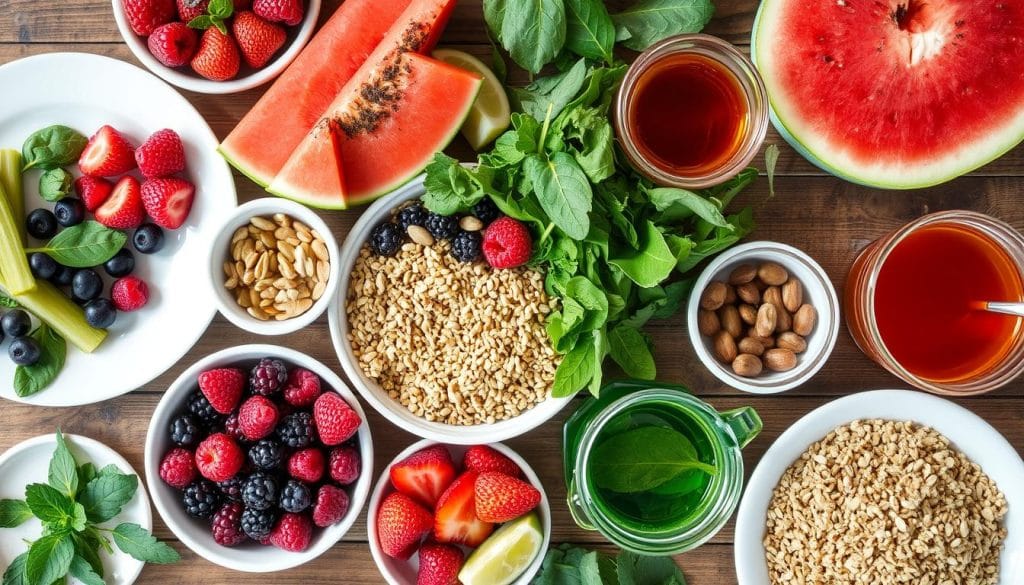
Also, keeping your diet balanced is key. Make sure you eat a variety of fruits, veggies, lean proteins, and whole grains. A balanced diet supports your health and helps manage menopause symptoms like hot flashes. Focus on eating foods that are good for you and meet your body’s changing needs.
Clothing Choices for Comfort
Choosing the right clothes is key to feeling comfortable during hot flashes. It’s important to wear breathable fabrics. Cotton and linen are great because they let air in, cooling you down.
Stay away from synthetic fabrics. They hold heat and moisture, making you feel worse.
Layering your clothes is also smart. It lets you adjust to changing temperatures. Start with a thin, moisture-wicking layer. Then add a loose, breathable top layer.

When picking clothes for hot flashes, avoid tight ones. They block air and keep you warm. Go for loose clothes that let your body breathe. Dresses, skirts, and wide-leg pants are good choices.
Make your wardrobe more comfortable for hot flashes. Focus on clothes that help you stay cool. With breathable fabrics and layers, you can handle hot flashes better.
Hydration Tips to Reduce Hot Flashes
Staying hydrated is key to managing menopause symptoms, especially hot flashes. Drinking enough water can help lessen their frequency and intensity.
Your body needs enough water to keep its temperature right. Drinking at least eight 8-ounce glasses a day is a good start. This habit not only keeps you hydrated but also helps reduce hot flashes. Always drink water when you feel thirsty.
Knowing when you’re dehydrated is important. Signs like dry mouth, fatigue, and headaches mean you need more water. Choose cool or room temperature water instead of hot drinks that might make hot flashes worse. Cold drinks can sometimes be too much for your body.
Getting a good water bottle can help you remember to drink more often. You can also add lemon or cucumber slices to your water for a nice flavor. In short, staying hydrated can greatly improve your comfort and health.
Stress Management Techniques
Managing stress is key when dealing with menopause symptoms. Stress can make symptoms worse, so finding ways to relax is important. Deep breathing exercises are very helpful. Try inhaling deeply, holding your breath, then exhaling slowly to calm down.
Meditation is also great for reducing stress. It helps you find peace inside. This can help lessen hot flash triggers.
Yoga is another good way to handle stress. It involves gentle stretches and mindful movements. Try poses like child’s pose or savasana for deep relaxation. Talking to yoga experts can help you find what works best for you.
Many women have found these methods helpful. Oprah Winfrey talks about meditation in her daily life. Dr. Judith Orloff also stresses the importance of deep breathing for stress management. This can help reduce hot flash triggers.
Exercise and Physical Activity
Regular exercise can help manage menopause symptoms, especially hot flashes. It can reduce how often and how bad hot flashes are. A menopause workout plan can greatly improve your health.
Exercise for hot flash relief doesn’t need to be hard. Walking, swimming, and yoga are good for all fitness levels. Choose something you like to make it easier to keep up.
Adding exercise to your day helps with hot flashes and more. It improves heart health, mood, and sleep. Exercise does more than just ease menopause symptoms; it leads to a healthier life.
Your menopause workout plan should fit your needs and fitness. Talk to a fitness expert or doctor to make a plan just for you. Start your journey to better health and comfort with fun and regular physical activity.
Over-the-Counter Remedies and Supplements
Menopause can be tough, but there are ways to ease symptoms like hot flashes. Over-the-counter remedies and supplements are designed to help. They offer relief and support during this time.
Vitamin E is often suggested to help with hot flashes. While studies show mixed results, many women find it helpful. They notice relief after using it regularly.
Black cohosh is another popular choice. It’s an herbal supplement used for menopause symptoms. Though evidence varies, many people find it useful in their support routine.
Phytoestrogens are compounds in plants that act like estrogen. You can find them in soy and flaxseed. Some studies suggest they might help with hot flashes. But, it’s important to talk to a doctor before adding them to your diet.
Before trying any new supplement, think about the risks. Always talk to your doctor first. They can help make sure these remedies are safe for you and won’t interact with your medications.
Natural Remedies to Keep You Cool
Looking into natural remedies can be a great way to stay cool during menopause. Herbal options like black cohosh and red clover are popular for helping with hot flashes. They are a favorite among many for their natural support.
Acupuncture is also a powerful tool for reducing hot flashes. Experts say it can balance your body’s energies, bringing a cooling effect. Studies show it can really help with menopause symptoms over time.
Herbal teas are not to be overlooked. Chamomile and peppermint teas can calm your nerves and cool you down. Drinking them regularly can be a soothing ritual that boosts your health.
Cooling gel pads are another great tool for staying cool. They offer quick relief and can be used anywhere on your body. Many find them especially useful for night sweats, helping them sleep better.
Using a mix of these therapies can lead to a well-rounded approach to managing menopause. Whether you prefer herbal remedies, acupuncture, or cooling gel pads, each one adds comfort to your day.
Creating a Cool Sleep Environment
Managing menopause sleep quality can be tough. But, making a few simple changes can make a big difference. Start by using breathable bedding like cotton or linen. These materials help keep you cool by wicking away moisture.
Keeping your bedroom cool is also key. Try to keep it between 60-67°F for the best sleep. You can use a fan or air conditioner to control the temperature. Also, consider cooling mattress toppers and pillows. They’re made to keep you cool and comfortable.
By trying these tips, you can improve your sleep during menopause. Creating the right sleep environment and using the right tools can help you sleep better. Enjoy restful nights without interruptions.
Creating a Hot Flash Emergency Kit
Being ready for sudden hot flashes can greatly improve your comfort. A hot flash survival kit is key for those urgent moments. It should be easy to carry and quick to find, helping you stay cool anywhere.
Think about adding portable cooling tools like small fans or cooling towels. They offer fast relief in seconds. Also, cooling wipes are great for quick temperature drops and a fresh feel.
Don’t forget to include a spare set of clothes in your kit. Choose lightweight, breathable items for when you need to change. Keeping hydrated is also vital, so remember to pack a water bottle. It helps manage your body temperature and keeps you refreshed.
With a well-stocked hot flash survival kit, you can handle unexpected hot flashes with confidence. Whether you’re at work, out running errands, or on vacation, these items provide quick relief. They help you stay cool and composed all day long.
Conclusion
Starting menopause can be tough, but you can handle hot flashes with the right steps. We’ve looked at many ways to stay cool, from what you eat to how you dress. These tips help you feel better every day.
Trying out different ways to fight hot flashes is important. What works for one person might not work for you. You can mix and match tips to find what works best. Also, talking to doctors can help you find the best solutions for you.
Remember, you’re not alone in menopause. Friends, family, or online groups can offer support and advice. By using these tips, you can make menopause easier and more enjoyable. Let’s take charge and stay informed as we go through this important time.