

Did you know nearly 1.3 million women in the United States enter menopause each year? This shows how many women go through big changes in midlife. Adding regular exercise to your routine can really help manage menopause.
Menopause brings changes like hormonal shifts, weight gain, and mood swings. Staying active can help lessen these symptoms. This guide will show you how exercise can improve your health during this time.
Key Takeaways
- 1.3 million women in the US experience menopause annually.
- Regular physical activity is crucial for effective menopause management.
- Exercise helps alleviate menopausal symptoms like mood swings and weight gain.
- Staying active promotes better overall health during midlife health changes.
- This guide provides practical exercise recommendations and benefits.
Understanding Menopause and Its Effects
As you get closer to menopause, you’ll notice changes in your life. These changes come from hormonal shifts, especially in estrogen levels. Estrogen helps control many body functions. Menopause happens naturally in women between 45 and 55.
During this time, your body goes through big hormonal changes. These changes can affect your mind and body.
Discover our quick recommendations for products designed to support menopause and enhance your overall well-being here. Wall Pilates is a great low-impact exercise. You could try this book: Wall Pilates Workouts for Women In Menopause
Hot flashes are a common symptom of menopause. They make you feel suddenly very hot. You might also feel mood swings and have trouble sleeping. These symptoms show the hormonal changes in your body.
Knowing about these changes helps you manage symptoms better. Learning what to expect lets you make healthy choices. For example, regular exercise can help lessen symptoms. Understanding menopause helps you stay healthy and balanced during this time.
Benefits of Exercise During Menopause
Regular physical activity brings many benefits during menopause, beyond just weight control. It improves your heart health, reducing the risk of heart diseases. This is especially important during menopause.

Exercise also helps with mood. It boosts endorphins, which can ease stress and anxiety. This makes you feel happier and more balanced. Plus, it strengthens your bones, lowering the risk of osteoporosis.
Finally, exercise can help with symptoms like hot flashes and night sweats. Adding workouts to your routine can greatly improve your well-being during this time.
Types of Exercise Recommended During Menopause
Staying active during menopause is key for your health. Mixing exercises like aerobic activities, strength training, and flexibility exercises is good for your body.
Aerobic Activities: These improve your heart health, which is vital during menopause. Brisk walking, swimming, and cycling are great. They help keep your heart strong and manage your weight.
Discover our quick recommendations for products designed to support menopause and enhance your overall well-being here. Wall Pilates is a great low-impact exercise. You could try this book: Wall Pilates Workouts for Women In Menopause
Strength Training: It’s important to keep your muscles strong as you age. Free weights, resistance bands, or body-weight exercises help. They also help keep your bones strong and prevent osteoporosis.
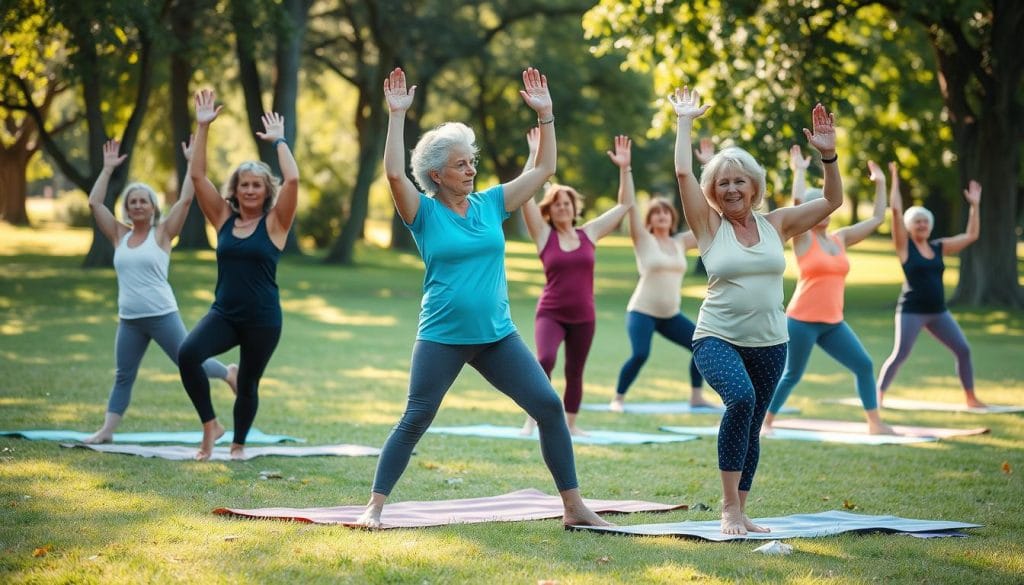
Flexibility Exercises: Flexibility can be hard to keep during menopause. Yoga and stretching improve your mobility and reduce stiffness. They help prevent injuries and make daily activities easier.
A mix of aerobic activities, strength training, and flexibility exercises is best. Find activities you like and can do regularly. This will help you through menopause smoothly.
Adapting Your Exercise Routine
As you go through menopause, it’s key to create a workout plan that fits your new energy levels, joint health, and lifestyle. Changing your fitness routine helps you stay active while dealing with your body’s unique changes.

Managing your energy levels is crucial in a menopause exercise plan. What worked for you before might not now. Try yoga or swimming, which are easier on the joints and still give a good workout.
Adding these new activities to your routine is a great way to make necessary fitness changes. A varied workout keeps things interesting and keeps you motivated. Try different workouts and get advice from a fitness expert to make a plan that suits you.
Your workout plan should boost your well-being, with flexibility being key to handling menopause’s physical changes. Always listen to your body and adjust as needed for a balanced and fulfilling fitness life.
How Exercise Helps with Menopausal Symptoms
Regular exercise can help a lot during menopause. It offers many benefits that make life easier. Activities like yoga, walking, or strength training can improve your wellbeing.
Hot flashes and night sweats can be tough. But, exercise can help control them. Studies show that active people have fewer night sweats and better sleep.
Exercise also helps with your mood. It can reduce anxiety and mood swings common in menopause. This is because it releases endorphins, or ‘feel-good’ hormones.
Adding exercise to your daily routine is good for more than just symptoms. It boosts your heart health and helps with weight control. Being active is a great way to improve your health during menopause.
Exercise and Bone Health
Keeping bones healthy during menopause is key. Activities like weight-bearing exercise and strength training are vital for osteoporosis prevention and bone density. Adding these exercises to your routine can make bones stronger and reduce fracture risk.
Studies show that strength training boosts bone formation and slows loss. The National Osteoporosis Foundation says walking, jogging, and dancing are great for bone density.
The American College of Sports Medicine backs resistance exercises. Free weights, bands, or body-weight exercises like squats and lunges help with osteoporosis prevention. It’s never too late to start; even post-menopausal women can improve bone strength with regular exercise.
Being active and doing strength training also boosts overall health and mobility. It helps make menopause healthier. Remember, keeping bones healthy is about more than just preventing osteoporosis. It’s about living a quality life that keeps you active and independent for years.
Creative Ways to Stay Motivated
Keeping up with exercise motivation can be tough, especially during menopause. But, there are many creative ways to make your fitness journey fun and rewarding.
First, setting achievable fitness goals is key. These goals give you something to work towards and celebrate when you reach them. Whether it’s getting stronger, more flexible, or losing weight, clear goals help you stay on track.
Trying new and fun physical activities is another great idea. Routine can get boring, so mix it up! Try dancing, swimming, or hiking. The goal is to find activities that you love, making exercise a joy.
Also, having a workout buddy can be a big help. Exercising with a friend makes it more fun and adds accountability. It’s easier to show up when someone else is counting on you.
Lastly, don’t forget about rewards. Treat yourself to small rewards when you reach your fitness goals. A new workout outfit, a massage, or a night out can motivate you to keep going.
By using these creative strategies, you can turn your fitness goals into enjoyable activities. This makes your menopause journey both healthy and fun.
Precautions and Safety Tips
During menopause, it’s key to focus on exercise safety. Knowing your limits is important. Always listen to your body. Don’t ignore pain, as it can cause injuries, which are harder to heal during this time.
Getting the right gear is also vital. Good shoes and comfy, sweat-wicking clothes can improve your workout. Plus, proper technique is crucial. It helps prevent injuries, whether you’re lifting or doing yoga.
Before starting any new exercise, talk to a healthcare provider. They can give advice tailored to your health. This is especially true if you have health issues or are new to exercise.
Small changes can make a big difference in exercise safety. If high-impact exercises are too hard, try swimming or brisk walking. Take breaks and drink water to stay energized and cool.
In short, following these tips will make your fitness journey safer and more enjoyable during menopause. By balancing excitement with caution and care, you’ll have a healthier transition.
Conclusion
Staying active is key to navigating menopause well. It’s a chance to make positive lifestyle changes for better health. This article covered important topics like understanding menopause, finding the right exercises, and keeping bones strong.
Doing different exercises can help with menopause symptoms and keep you active. You can choose from cardio, strength training, or flexibility exercises. It’s important to make your routine fit your needs.
Motivation and safety are also crucial. Finding fun ways to stay active can make it rewarding. Also, taking care to avoid injuries is important as you start this new chapter. By following these tips, you can improve your life and face the future with confidence.
Discover our quick recommendations for products designed to support menopause and enhance your overall well-being here. Wall Pilates is a great low-impact exercise. You could try this book: Wall Pilates Workouts for Women In Menopause