


Can a simple mineral hold the key to relieving your menopause symptoms naturally?
Menopause can bring hot flashes, sleep issues, anxiety, and mood swings. For over half of postmenopausal women, finding natural solutions is key. Magnesium, a powerful mineral, supports many bodily functions and may help with menopause symptoms.
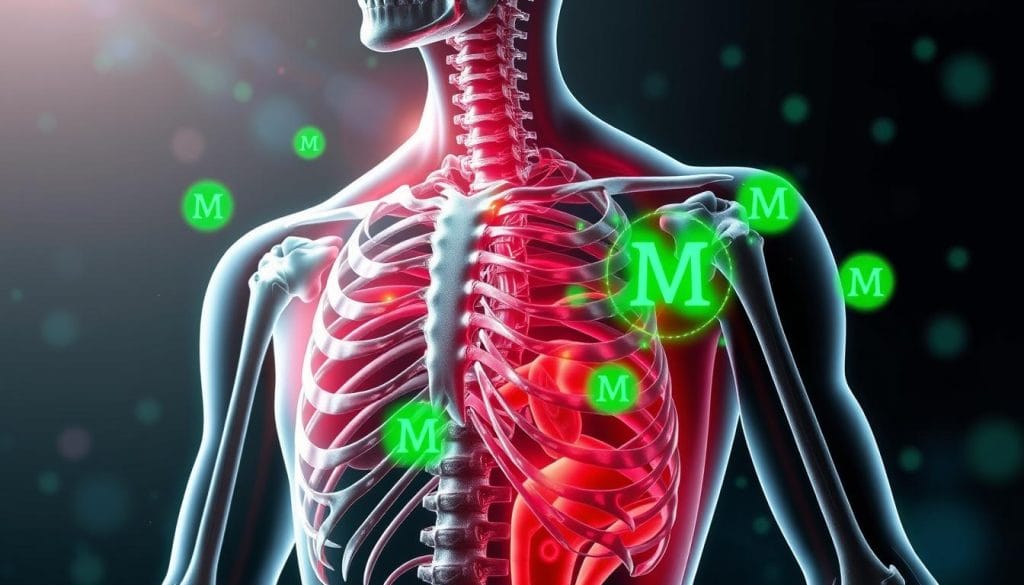
Magnesium is vital for bone health, heart support, and mood. About 60% of magnesium is in our bones, helping prevent osteoporosis, a big concern during menopause. It also supports heart health, reduces inflammation, and boosts brain function, making it key for managing menopause naturally.
Since 30% of adults in developed countries lack magnesium, getting enough is important. The National Institutes of Health suggest that women over 31 need 320 milligrams of magnesium daily. For women going through menopause, the right amount of magnesium can help reduce symptoms and improve overall health.
Key Takeaways
- Magnesium plays a crucial role in preventing osteoporosis by supporting bone health.
- Proper magnesium levels can alleviate hot flashes and improve sleep quality.
- Supplementing with magnesium can reduce anxiety, mood swings, and stress.
- Magnesium supports cardiovascular health and reduces inflammation.
- Consuming 320 milligrams of magnesium daily is recommended for women aged 31 and older.
Fundamentals of Magnesium
Magnesium is a key mineral in our bodies, playing a role in over 300 biochemical reactions. It’s crucial for making proteins and controlling blood sugar. About 60% of our magnesium is in our bones, which is especially important during menopause.
Quick Recommendation: This blog tries to offer useful products that might help support you in your menopause journey. If you are looking for a recommendation, try this link: Magnesium supplements
Magnesium helps with energy, muscle function, and keeping our nervous system in check. Research shows many women in the U.S. don’t have enough magnesium and a significant portion of the UK population may be deficient in magnesium, with estimates suggesting that around 10-30% of women may not meet their recommended daily intake. This can lead to health problems due to a lack of magnesium in our diets.
Magnesium is not just good for our bones. It also helps manage symptoms of menopause. Understanding magnesium’s role in our bodies can help us stay healthy and fight off age-related issues.
We need to value magnesium and keep our levels up. A balanced diet and supplements can help. The National Diet and Nutrition Survey shows many women don’t get enough magnesium. Supplements can be a good way to make sure we’re getting enough.
How Magnesium Helps Alleviate Hot Flashes
Hot flashes are a common symptom of menopause. They can disrupt daily life and sleep. Research shows that magnesium helps reduce hot flashes by balancing hormones, especially estrogen.
A study looked at 691 articles and picked 17 studies with 8,667 patients. It found that magnesium oxide at 400-800 mg reduced hot flashes. This suggests magnesium could help, but more research is needed.
Studies also found that menopausal women have more magnesium and calcium than pre-menopausal women. This shows magnesium’s importance in balancing estrogen and reducing hot flashes.

Magnesium and hormones like estrogen and progesterone work together. When estrogen levels drop during menopause, magnesium can help restore balance. This can lessen hot flashes.
Some women choose hormone replacement therapy (HRT). But magnesium is a natural option for those looking for non-pharmaceutical solutions. It’s key for women with menopausal symptoms, like hot flashes, to get enough magnesium.
Eating foods high in magnesium and taking supplements can help. Include almonds, green leafy vegetables, legumes, and whole grains in your diet. But always talk to a healthcare provider before starting supplements to avoid too much.
Combating Insomnia with Magnesium
Many women struggle with sleep issues during menopause, with about half facing these problems after menopause. Adding magnesium for better sleep to your routine can help a lot. Magnesium glycinate, for example, has calming effects on the nervous system. This can greatly improve sleep quality during menopause, especially for those dealing with hormonal changes.
Magnesium helps regulate our body’s internal clock and relaxes muscles. This makes it a strong tool against insomnia remedies. Research shows that more magnesium intake leads to better sleep. People who took in more magnesium felt more refreshed and slept longer than seven hours. It’s important to note that the National Health Interview Survey advises not to take more than 350 mg of magnesium daily to stay safe.

Quick Recommendation: This blog tries to offer useful products that might help support you in your menopause journey. If you are looking for a recommendation, try this link: Magnesium supplements
For menopausal and post-menopausal women, magnesium can help with symptoms like restless legs and night sweats. Along with other insomnia remedies like Cognitive Behavioral Therapy for Insomnia (CBT-I) and melatonin, magnesium forms a solid plan for better sleep.
Since adult women need 310-320 mg of magnesium daily, finding it in foods like pumpkin seeds, spinach, and almonds is key. By following these tips, you can improve sleep quality during menopause and enjoy better nights’ sleep.
Magnesium’s Role in Reducing Anxiety and Mood Swings
Menopause can be tough, especially on your mental health. Anxiety and mood swings are common. Magnesium is key to your emotional health. It helps manage anxiety and keeps your mood stable.

Magnesium is vital in your body, involved in over 400 reactions. Stress makes your body use more magnesium, which can lead to anxiety. Low magnesium makes stress worse.
Magnesium affects your mood by controlling neurotransmitters. It calms your nervous system. It also helps balance stress hormones.
Magnesium deficiency can cause fatigue, irritability, and anxiety. It’s important for serotonin and norepinephrine, which regulate mood. Getting enough magnesium can improve your life during menopause and beyond.
Improving Bone Density with Magnesium
Postmenopausal women often lose bone faster because of lower estrogen levels. This makes it key to prevent osteoporosis. Magnesium is crucial for bone health, helping to keep bones strong by increasing bone mineral density. About 60 percent of our magnesium is in our bones, showing its role in bone health.

A study found 82 percent of 171 postmenopausal women were low in magnesium. This can weaken bones and raise the risk of fractures. Studies show magnesium helps the body absorb calcium better, which is vital for strong bones and fighting osteoporosis.
A 2021 review of seven studies showed magnesium’s benefits. It increased bone density and lowered fracture risk. Magnesium is key for bone health, making it vital for preventing osteoporosis and keeping bones strong.
Getting enough magnesium is crucial for bone health. It helps with bone remodeling, making it a must for postmenopausal women. Include magnesium-rich foods in your diet and talk to a healthcare provider about supplements for better bone health.
Dietary Sources of Magnesium
Getting enough magnesium is key for your health, especially during menopause. The average diet might not always have enough. But, adding natural sources of magnesium can make a big difference. Here are some foods rich in magnesium to add to your diet:
Nuts like almonds and cashews are great sources of magnesium. They’re not only delicious but also full of this important mineral. Leafy greens, such as spinach, are also excellent. They’re easy to add to salads, smoothies, and meals.
Whole grains are another group rich in magnesium. Brown rice, quinoa, and whole-wheat bread are all good sources. These foods can help you get enough magnesium.
Even though these magnesium-rich foods are available, many diets lack them. This is because we often eat too much processed food. Eating a balanced diet with these foods can help keep your magnesium levels up. This is especially important during menopause.
- Nuts: Almonds, cashews
- Leafy Greens: Spinach, kale
- Whole Grains: Brown rice, quinoa, whole-wheat bread
By making a conscious effort to eat these magnesium-rich foods, you can improve your health. This can make menopause easier and more comfortable for you.
Magnesium Supplements: What You Need to Know
For postmenopausal women, magnesium supplements can be a big help. They need about 320 milligrams daily, but many don’t get enough. Knowing the different types of magnesium is key to making good choices.
Choosing the right magnesium depends on your health needs. For example, magnesium glycinate is great for sleep and stress. Magnesium citrate is good for constipation because it has a laxative effect. It’s also important for bone health, which is vital for women after menopause.
Magnesium oxide is good for hot flashes, a common symptom of menopause. Magnesium malate and magnesium chloride offer benefits like easing muscle pain and improving digestion. Always talk to a healthcare professional to find the best magnesium for you.
- Magnesium glycinate: Good for sleep and stress
- Magnesium citrate: Helps with constipation
- Magnesium oxide: May alleviate hot flashes
- Magnesium malate: Relieves muscle pain
- Magnesium chloride: Supports digestion
Too much magnesium can cause side effects like diarrhea and stomach upset. But, getting enough can boost your mood, heart health, and bone strength. Since 84 percent of postmenopausal women lack magnesium, supplements are essential.
Lifestyle Changes to Boost Magnesium Levels
Making some lifestyle changes can really help with increasing magnesium absorption and managing symptoms naturally. One key tip is to eat less processed food and more veggies and whole grains. These foods are full of magnesium and are good for your health.
Also, managing stress is important. Try yoga, meditation, or a simple walk to help. Stress can lower magnesium levels, so it’s good to reduce it.
Try to drink less caffeine and alcohol too. They can make your body lose magnesium. Eating foods rich in nutrients instead of sugary snacks helps keep your magnesium levels up. Magnesium is needed to process sugar.
Lastly, using transdermal magnesium therapy, like magnesium flakes in your bath, is a great way to absorb magnesium through your skin. It relaxes your muscles, reduces fatigue, and improves sleep. These are all important during menopause.
- Reduce processed food intake
- Increase consumption of vegetables and whole grains
- Incorporate stress-reducing techniques
- Limit caffeine and alcohol
- Use magnesium flakes in baths
By following these tips, you can naturally increase your magnesium levels and better manage menopause symptoms.
Potential Side Effects of Magnesium
Magnesium is key for our health, but it can have side effects, especially if taking too much. Too much magnesium from supplements can cause diarrhea, nausea, and stomach pain. It’s important to watch how much magnesium you take to avoid these issues.
Too much magnesium can also lead to serious problems like heart issues or kidney problems. Always talk to your doctor before taking magnesium supplements to avoid too much. Many people don’t get enough magnesium because of bad eating habits, health issues, or certain medicines.
The National Institutes of Health says women over 31 should get 320 milligrams of magnesium daily. Knowing how much magnesium you’re getting can help avoid problems. Always check your diet and talk to a doctor about magnesium supplements.
Conclusion
Using magnesium during menopause can help with many symptoms. It can reduce hot flashes, improve sleep, lower anxiety, and strengthen bones. Studies also show it’s good for your heart and metabolism.
Eating foods high in magnesium or taking supplements can make menopause easier. Magnesium is key for many body functions, helping keep you healthy. While magnesium supplements may not work for everyone, many find relief, especially with 400 to 800 mg of magnesium oxide.
But, it’s important to watch out for side effects and not take too much. Talking to a doctor helps make sure you’re getting the right amount. By using natural remedies like magnesium and getting personalized care, you can feel better during this time.
Quick Recommendation: This blog tries to offer useful products that might help support you in your menopause journey. If you are looking for a recommendation, try this link: Magnesium supplements