
Did you know over 70% of women face gut issues during menopause? This fact shows how closely our digestive health is tied to hormonal changes. As you go through menopause, knowing how your gut health affects you is key.
Gut health, or the balance of good and bad bacteria in your gut, changes with estrogen levels in menopause. These shifts can cause bloating, constipation, and indigestion. Studies in top medical journals show a bad gut can make menopause symptoms worse.
Learning about this link can help you take care of your gut during menopause. By focusing on your gut health, you can ease some of the discomforts of this time. This can also improve your overall life quality.
Key Takeaways
- Over 70% of women report gastrointestinal issues during menopause.
- Hormonal changes, particularly estrogen fluctuations, affect gut microbiota composition.
- Improving gut health can help manage menopausal symptoms more effectively.
- Proactive gut health management is crucial for digestive well-being during menopause.
- Understanding gut health empowers you to improve your quality of life during menopause.
The Role of Gut Health in Overall Well-being
Your gut health is key to your overall well-being. It’s often called the “second brain” because it’s closely tied to your health. A balanced gut microbiome supports your digestion, mental health, and immune system.
An unbalanced gut can cause many health problems. It affects vitamin production, which can change your mood and stress levels. So, keeping your gut microbiome in balance is vital for your mental health. Research shows your gut talks to your brain, affecting your emotions and thinking.
Your gut health also affects your immune system. A healthy gut helps your immune system fight off infections. Studies show a balanced gut microbiome boosts your immune system, making you less likely to get sick.
During menopause, the connection between your brain and gut is even more important. The stress of this time can worsen gut health issues. Keeping your gut healthy helps support your mental and immune systems, easing the transition.
How Menopause Affects Your Gut Health
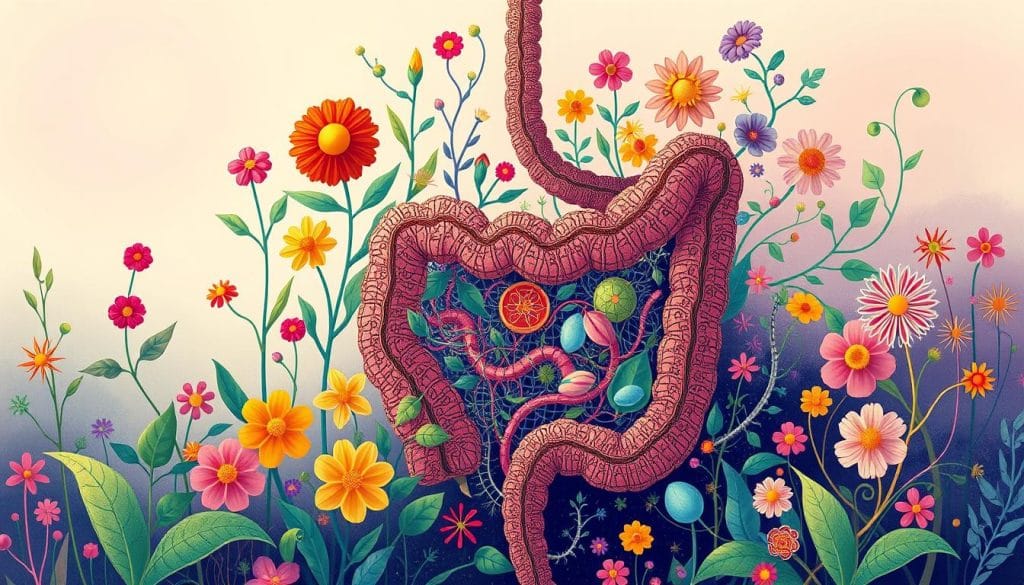
Menopause changes your gut health a lot, mainly because estrogen levels drop. These hormonal changes affect the gut microbiota, leading to noticeable changes. Studies show that estrogen is key to a balanced gut environment. When estrogen levels fall, you might feel bloated and uncomfortable in your stomach.
Research shows that during menopause, the diversity of gut bacteria decreases. This change in microbiota can cause common stomach problems. It shows how important hormonal balance is for our gut health. Articles also link menopausal stomach issues to changes in gut bacteria.
Symptoms of Poor Gut Health During Menopause
Menopause can really mess with your gut health, causing a lot of discomfort. Bloating is a big problem, making you feel like your stomach is always full and tight. You might also get indigestion, which feels like heartburn or an upset stomach after eating.
These symptoms can be really tough, especially when you’re already dealing with hot flashes and mood swings. It’s like your body is trying to tell you something, but it’s hard to listen.
Bowel irregularity is another common issue, leading to constipation or diarrhea. Many women find their bowel habits changing during menopause. This can really disrupt your daily life and make you feel unwell.
It’s important to know that these symptoms are different from the usual menopause effects. If you’re experiencing persistent or severe gut problems, you should talk to a doctor. Health organizations say that tackling these issues can really improve your life quality.
Studies show that more menopausal women deal with gut problems. Women have shared their struggles with bloating, indigestion, and irregular bowel movements. By taking care of your gut health, you can make yourself feel better during this time.
Dietary Tips for Supporting Gut Health During Menopause

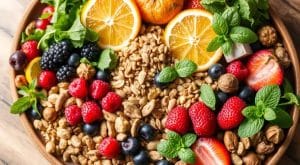
Keeping your gut healthy during menopause is easier with the right diet. Eating a mix of fruits, vegetables, and whole grains is key. These foods give you the nutrients you need for a smoother transition.
Adding fermented foods to your meals can boost your gut health. Yogurt, kefir, sauerkraut, and kimchi are full of good bacteria. They help with digestion and keep your gut healthy. This can help with the digestive problems many women face during menopause.
Drinking enough water is also important. It helps keep your bowels regular and prevents constipation. Try to drink at least eight glasses of water a day.
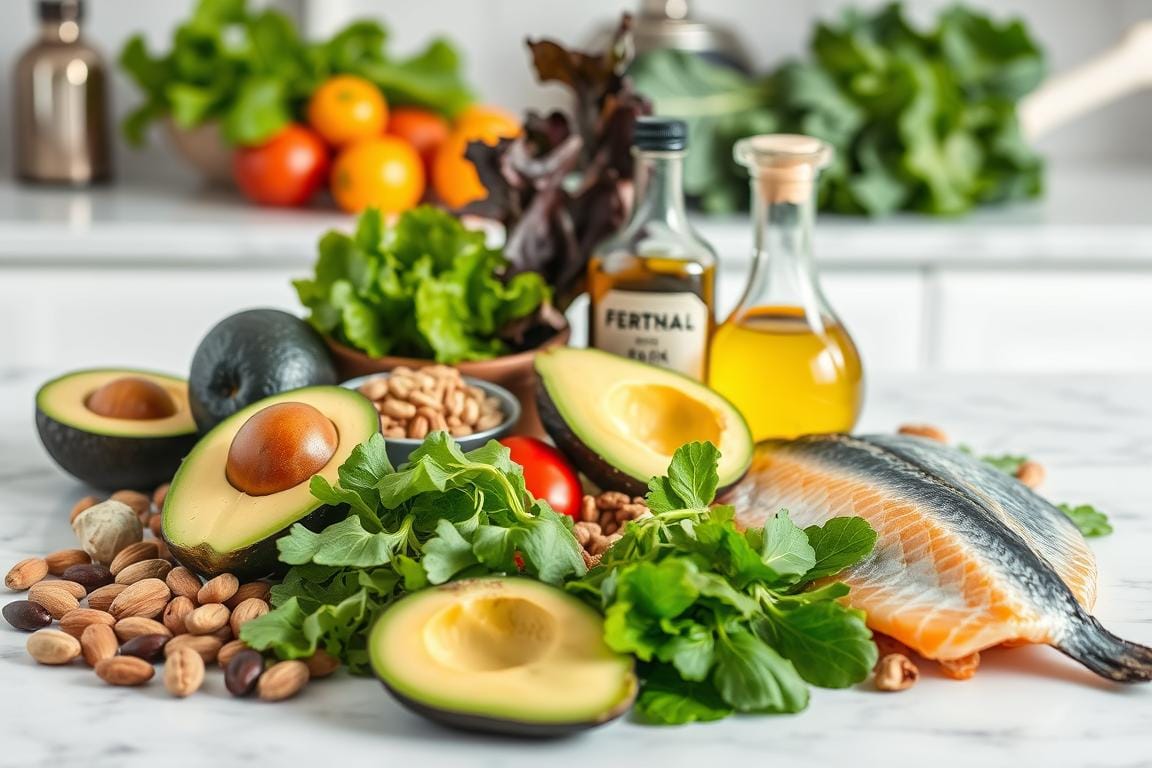
Eating foods rich in omega-3s, like salmon and flaxseeds, is also beneficial. Adding colorful fruits and vegetables to your diet helps too. These foods fight inflammation and give you important vitamins and minerals. Together, they support your gut health and overall well-being during menopause.
By eating a balanced diet, including fermented foods, and staying hydrated, you can improve your gut health during menopause. Making these simple changes can greatly improve your well-being. It helps you manage this life stage more easily.
Probiotics and Menopause: What You Need to Know
Menopause brings many changes, and keeping your gut healthy is key. Probiotic supplements help by adding good bacteria to your gut. They can also help with digestive issues caused by hormonal changes during menopause.
Studies show that certain probiotics, like Lactobacillus and Bifidobacterium, can help. They may ease symptoms like bloating and irregular bowel movements. This can help your gut health and balance your hormones, making you feel better.
Experts say probiotic supplements are a good part of managing menopause. The American Gastroenterological Association says good gut flora is vital for health. Adding these supplements can improve your digestion and help with menopause symptoms.
Gynecological groups also offer advice on using supplements during menopause. They stress the importance of choosing high-quality probiotics. This natural approach can support your body’s needs during this time.
The Importance of Fiber for Gut Health During Menopause
A high-fiber diet is key for your digestive health, especially during menopause. It helps keep bowel movements regular and fights constipation. These are big issues for many women during this time.
Soluble fiber turns into a gel in your stomach. You can find it in oats, beans, apples, and citrus fruits. It’s good for your heart and blood sugar.
Insoluble fiber, on the other hand, makes your stool bulkier. It helps food move through your body better. You can find it in whole grains, nuts, and veggies like carrots and celery. Eating both kinds of fiber is important for your health.
Eating a lot of fiber can also help with weight management during menopause. Foods high in fiber are low in calories but fill you up. This can help you avoid weight gain that often comes with menopause.
Many women have found that fiber helps with menopause symptoms. They say eating more fiber has improved their digestion and overall well-being.
To get more fiber, try eating more fruits, veggies, whole grains, and legumes. These foods are great for digestion and can make menopause easier to handle.
Lifestyle Changes to Improve Gut Health During Menopause
Menopause brings many changes, and keeping your gut healthy can be tough. Making lifestyle changes like reducing stress, exercising regularly, and getting better sleep can really help your gut health.
Stress is bad for your gut microbiome. Using stress-reducing activities like yoga and meditation can help. Deep breathing and mindfulness also work well to lower stress and improve gut health.
Regular exercise is another key. It boosts your gut’s health and function. Try walking, swimming, or dancing to see improvements. Exercise not only helps your gut but also eases other menopause symptoms.
Finally, getting enough sleep is crucial. Poor sleep can upset your gut bacteria, causing digestive problems. Good sleep habits, like a regular bedtime and avoiding screens before bed, are important. Quality sleep is essential for your overall health, including your gut, during menopause.
Conclusion
Understanding the link between gut health and menopause is key. It helps you navigate this life-changing phase better. By keeping your gut healthy, you can face menopause with fewer symptoms and a better quality of life.
Choosing healthy foods and probiotics can greatly improve your well-being during menopause. Adding regular exercise, managing stress, and staying hydrated also boosts gut health. These steps help ease menopause symptoms.
Getting help from health experts and women’s health groups is crucial. They offer guides and education to manage symptoms. With the right support, you can make choices that lead to a healthier, more vibrant life.