
Did you know that nearly 50% of women experience noticeable hair thinning by age 50, largely due to the hormonal changes associated with menopause? As an integral part of daily life, menopause hair care becomes essential to manage these changes. The hormonal shifts during menopause can significantly impact your hair’s health, making it more critical than ever to adapt and fine-tune your hair care routines.
According to the American Academy of Dermatology, the decline of estrogen and progesterone leads to hair changes, including increased hair loss and changes in texture. Additionally, studies from the North American Menopause Society highlight the critical role these hormonal shifts play in the overall health and quality of hair. By understanding and targeting the specific needs of your hair during menopause, you can maintain luscious, healthy locks.
Key Takeaways:
- Nearly 50% of women experience hair thinning by age 50 due to menopause.
- Hormonal changes are the primary culprits behind hair loss and texture changes during menopause.
- Adaptation of hair care routines is essential to manage hair menopause effectively.
- The American Academy of Dermatology provides insights into menopause-related hair changes.
- Studies from the North American Menopause Society emphasize the importance of hormonal health for hair.
Understanding Menopause and Its Impact on Hair
During menopause, many women notice changes in their hair. This is mainly due to hormonal shifts, especially the decrease in estrogen. Estrogen is vital for hair growth and maintaining its lifecycle. When estrogen levels drop, symptoms like menopausal hair thinning can occur, affecting confidence and self-image.
The National Institutes of Health (NIH) states that hormonal changes in menopause can decrease hair density and alter texture. These changes happen gradually but can be distressing. Leading endocrinologists also believe that estrogen reduction disrupts the hair growth cycle, causing more shedding and less volume.
Clinical studies show that menopausal hair thinning is common among postmenopausal women. The impact of hormonal changes on hair varies among women, influenced by genetics and overall health. Understanding these changes is crucial for managing menopause’s effects on hair.
Hair Loss During Menopause: Causes and Solutions
During menopause, many women face hair loss due to hormonal shifts. This condition is known as female pattern hair loss. As estrogen levels drop, hair becomes thinner and more brittle. Also, testosterone increases, leading to more dihydrotestosterone (DHT), which shrinks hair follicles.
Stress, a poor diet, and some medications can worsen hair loss during menopause. It’s vital to identify the root cause for effective menopause hair loss treatment.
Fortunately, various hair growth solutions exist to combat hair loss. These include:
| Treatment | Benefits | Sources |
|---|---|---|
| Minoxidil | Promotes hair regrowth by stimulating follicles | The American Hair Loss Association |
| Finasteride | Reduces DHT levels, slowing hair loss | Dermatological research reviews |
| Low-Level Laser Therapy (LLLT) | Improves hair density by enhancing cell activity | Success stories from women |
| Dietary Changes | Ensures hair receives necessary nutrients | Personal recommendations |
| Stress Management | Reduces stress-related hair loss | Health experts’ advice |
Choosing between medications like Minoxidil or natural methods is crucial. Always consult a healthcare provider to find the best menopause hair loss treatment for you. Effective hair growth solutions can significantly improve hair loss management during this phase.
Dealing with Greasy Hair in Menopause
Women in menopause often face unexpected changes, including increased oil production. This can make managing an oily scalp a real challenge. Understanding the causes and adopting a specific hair care routine can help. This approach can restore balance and keep your hair healthy and vibrant.
Hormonal shifts in menopause can cause your sebaceous glands to overproduce oil. This leads to a greasy scalp. Dr. Debra Jaliman, a well-known dermatologist, advises gentle cleansing. She also suggests avoiding harsh products that dry out your hair.
Creating a targeted hair care routine is key for managing oily scalp in menopause. Brands like Neutrogena and Paul Mitchell have products that balance scalp oil without drying out your hair. Regular use of these products keeps your scalp clean and fresh, reducing the need for frequent washing.
Many menopausal women have found effective routines to combat greasy hair. Simple changes, such as washing your hair less often, choosing the right dry shampoo, and using natural remedies like apple cider vinegar rinses, can make a big difference. These practical tips help manage oily scalp while keeping your hair healthy and shiny.
Brittle Hair and Menopause: Tips for Strengthening
Menopause introduces significant changes, including hair that becomes more brittle. This condition often stems from hormonal shifts, notably the drop in estrogen levels. These changes impact the hair’s structure. It’s vital to tackle these issues to enhance hair strength and elasticity.
Protein treatments are a key strategy for fortifying hair. They help rebuild and strengthen the hair shaft, reducing breakage risk. Given the aging and hormonal stress impacts, maintaining hair elasticity is paramount.
Integrating keratin, biotin, and collagen into your hair care routine can greatly benefit brittle hair. Trichologists note these ingredients replenish lost nutrients, restoring hair resilience. User feedback frequently praises these products for reversing hair damage and enhancing texture.
Now, let’s examine some top hair strengthening products preferred by middle-aged women:
| Product | Ingredients | User Rating |
|---|---|---|
| Olaplex Hair Perfector No. 3 | Bis-Aminopropyl Diglycol Dimaleate | 4.7/5 |
| Kerastase Resistance Bain Force Architecte | Pro-Keratin, Ceramides | 4.5/5 |
| Biotin Shampoo for Hair Growth | Biotin, Hydrolyzed Keratin | 4.6/5 |
Natural Remedies for Hair Health During Menopause
During menopause, many women look for natural ways to keep their hair healthy. There are many herbal remedies and DIY hair care options available. We will look at some top herbs and natural ingredients, their benefits, and simple recipes to try.
| Herb | Benefits | Usage |
|---|---|---|
| Rosemary | Stimulates hair growth, improves circulation | Apply rosemary oil mixed with carrier oil |
| Nettle | Rich in minerals, reduces hair loss | Use nettle tea as a hair rinse |
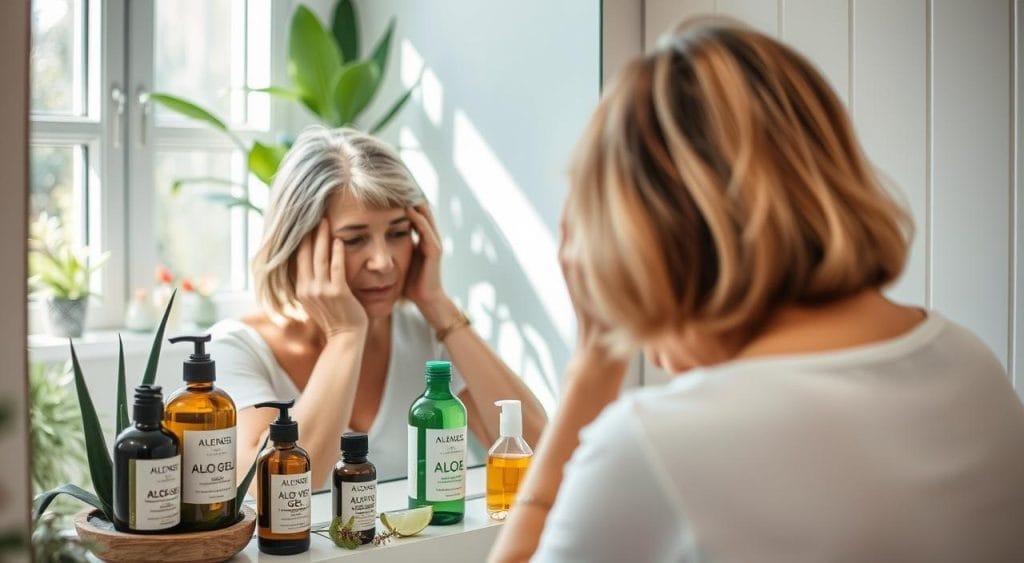
| Aloe Vera | Moisturizes scalp, reduces dandruff | Massage aloe vera gel into scalp |
Health experts also recommend adding these natural ingredients to your hair care routine:
- Coconut Oil: It deeply nourishes and hydrates hair. Warm a small amount, massage it into your scalp and hair. Leave for at least an hour before washing.
- Green Tea: It’s full of antioxidants, strengthening hair. Brew a strong cup, let it cool, and use it as a final hair rinse after shampooing.
- Apple Cider Vinegar: It balances scalp pH and adds shine. Dilute one part apple cider vinegar with two parts water and use it as a post-wash rinse.
Many women have found success with these natural hair treatments. They love how easy and effective they are. These remedies not only improve hair health but also boost overall well-being during menopause.
Diet and Nutrition: Key Components for Healthy Hair
Your diet is crucial for maintaining healthy hair, especially during menopause. A well-balanced diet rich in hair-healthy nutrients is vital for hair strength and growth. Experts in nutritional science suggest various foods and supplements to support hair health.
Clinical trials have demonstrated that specific nutrients can greatly improve hair quality. Ensuring your diet includes these nutrients can be highly beneficial. Let’s delve into the essential components of a hair-healthy diet:
Supplements like biotin, omega-3 fatty acids, and vitamin E can complement your diet and promote healthier hair. These are especially crucial during menopausal hair changes. Foods high in protein, such as lean meats, fish, and legumes, are also key for a balanced diet.
To make informed choices, here is a detailed guide on foods and supplements beneficial for your hair health:
| Food/Nutrient | Benefits | Recommended Sources |
|---|---|---|
| Biotin | Strengthens hair and nails | Eggs, nuts, whole grains |
| Omega-3 Fatty Acids | Reduces inflammation, enhances hair follicles | Salmon, chia seeds, walnuts |
| Vitamin E | Prevents oxidative stress | Spinach, almonds, sunflower seeds |
| Protein | Essential for hair structure | Chicken, fish, legumes, tofu |
A balanced diet hair regimen, supplemented with essential nutrients, can significantly impact postmenopausal hair care. Consulting a dietitian for a personalized meal plan can offer the best strategies for maintaining healthy hair during menopause.
Choosing the Right Hair Care Products
During menopause, selecting the right hair care products is vital. This stage often brings hair thinning, brittleness, and scalp sensitivity. To combat these issues, it’s crucial to choose products tailored for menopausal hair. Understanding the ingredients and opting for hypoallergenic shampoos is key to avoiding irritations.
Examining product labels can reveal beneficial elements for aging hair, like biotin, keratin, and natural oils. Avoid ingredients that could irritate, such as sulfates, parabens, and synthetic fragrances. Brands like Dove, Garnier, and Pantene are recommended for their gentle and effective formulas. Dermatologists also suggest focusing on hydration and protection without weighing down your hair.
| Brand | Key Ingredients | Benefits |
|---|---|---|
| Dove | Biotin, Vitamin E | Strengthens hair, promotes growth |
| Garnier | Avocado oil, Shea butter | Deep conditioning, frizz control |
| Pantene | Pro-Vitamin B5, Keratin | Moisturizes, repairs damage |
By following dermatologists’ and hair care experts’ advice, you can make informed choices for your hair during menopause. Regularly checking consumer reports and understanding product ingredients will help improve your hair care routine.
Scalp Care Tips During Menopause
During menopause, maintaining impeccable scalp health is crucial for healthy hair growth. A consistent routine with hydrating scalp treatments is key to reduce scalp irritation. These treatments soothe the skin and ensure optimal moisture, addressing common menopausal issues.
Dermatologists like Dr. Francesca Fusco suggest using aloe vera and chamomile extract to reduce scalp irritation. These natural elements calm the skin, tackling inflammation often seen during menopause.
Recent studies show that women in menopause benefit from specialized hydrating scalp treatments. These treatments retain moisture and strengthen hair follicles. They provide the hydration and nutrients needed for robust hair growth.
| Product | Benefits | Customer Feedback |
|---|---|---|
| Kérastase Specifique Dermo-Calm | Reduces irritation, hydrates scalp | Highly recommended for sensitive scalps |
| Neutrogena T/Gel Therapeutic Shampoo | Soothes inflammation, relieves itching | Effective for chronic scalp issues |
| Head & Shoulders Clinical Strength | Prevents flaking, restores moisture | Best for severe dryness and irritation |
Experts advise a personalized approach to scalp care. Choose products that meet your specific needs. This ensures a smooth menopause journey, leading to lasting scalp health and vibrant hair.
Maintaining Hair Volume through Menopause
Navigating menopause can be tough, especially when it comes to hair volume. Hormonal shifts lead to thinning, but the right strategies can help. You can effectively volumize thinning hair.
Using volume-boosting products is a key hair thickening technique. These products add body and lift to aging hair. It’s crucial to pick products with ingredients that strengthen the hair shaft and improve texture.
Hairstylists suggest specific methods to boost volume. Blow-drying with a round brush, applying root-lifting sprays, and using volumizing mousse are effective. For optimal results, style your hair when it’s slightly damp. This allows products to penetrate and work their magic.
| Product | Key Feature | Benefit |
|---|---|---|
| R+Co Dallas Biotin Thickening Shampoo | Biotin & Vitamin B5 | Strengthens and volumizes |
| Living Proof Full Dry Volume Blast | Volumizing and Texturizing Molecules | Instant lift and fullness |
Beauty influencers share valuable insights through video tutorials. They focus on hair volume hacks for older women. These tutorials provide practical steps and styling tips using volume-boosting products. They make these techniques accessible and easy to follow.
By incorporating these hair thickening techniques and using effective products, you can manage and maintain hair volume during menopause. This ensures your hair remains vibrant and full of life.
Psychological Impact of Hair Changes During Menopause
Hair changes during menopause can greatly affect your emotional state. The shift in hormone levels often causes self-esteem issues related to hair loss. It’s vital to understand the psychological impact to manage these changes well.
Research shows that appearance changes, like hair loss, deeply affect women in menopause. Feeling a loss of control over one’s body can lead to anxiety and depression. Mental health experts highlight the emotional impact of hair loss on self-esteem.
Effective coping strategies are key to emotional well-being during this time. Joining support groups and forums can offer a sense of community. Here, you can share experiences and gain emotional support from others who understand your struggles. These platforms provide valuable strategies to help rebuild your self-esteem.
In summary, addressing the psychological aspects of hair changes during menopause is as crucial as tackling physical symptoms. By adopting effective coping strategies and seeking support from those who can relate, you can improve your emotional well-being. This approach helps you navigate this phase with more confidence.
Conclusion
As you navigate through the transformative journey of menopause, it’s crucial to understand and embrace the changes your hair may undergo. From dealing with hair loss and greasiness to strengthening brittle locks, every step is an opportunity for growth and self-love. By understanding the underlying causes and exploring effective solutions, you can maintain healthy, vibrant hair.
Adopting natural remedies and paying close attention to your diet and nutrition are key components in this process. Selecting the right hair care products and implementing scalp care tips can further enhance your positive hair journey. A proactive approach ensures that you can maintain hair volume and manage any changes with confidence.
The psychological impact of hair changes should not be overlooked. Embrace menopause as a time for self-reflection and empowerment. Draw inspiration from women who have navigated these changes gracefully and listen to experts who advocate for self-love and body positivity. Lifestyle coaches often stress a holistic approach, highlighting that your menopausal transition is just another phase of life full of potential and transformation acceptance.
Your hair transformation journey through menopause can be empowering and positive. With the right knowledge and approach, you can confidently embrace this new chapter in your life and celebrate the beauty that comes with change.