
Approximately ten million Americans over fifty have osteoporosis, with another 34 million having low bone mass. This highlights the critical need for essential nutrients during menopause. As menopause approaches, your body undergoes significant changes that can impact bone health. Osteoporosis becomes a major concern. Yet, with the right nutrients and lifestyle adjustments, you can lower your osteoporosis risk and maintain strong bones.
Understanding the link between osteoporosis and essential nutrients for menopausal bone health is key. By focusing on these nutrients, you can proactively protect your bones and decrease osteoporosis risk.
Key Takeaways
- Approximately 1 in 2 postmenopausal women will develop osteoporosis, making essential nutrients for menopausal bone health crucial.
- Lifestyle changes, including exercise and balanced diet, can improve bone health and reduce the risk of osteoporosis.
- Essential nutrients for menopausal bone health, such as calcium and vitamin D, play a critical role in maintaining strong bones.
- Up to 20% of bone loss can occur during menopause and post-menopausal stages, emphasizing the importance of essential nutrients for menopausal bone health.
- By understanding the importance of essential nutrients for menopausal bone health, you can take proactive steps to protect your bones and reduce your risk of osteoporosis, which is essential for overall bone health.
- Consulting a specialist and discussing treatment options, such as calcium and vitamin D supplementation, can help you develop a personalized plan for maintaining strong, healthy bones and preventing osteoporosis.
Understanding Bone Health During Menopause

Menopause brings significant changes, notably a drop in estrogen levels, which impacts bone health. Estrogen is vital for bone density, and its decrease raises osteoperosis risk. Studies show up to 20% of bone loss happens post-menopause. About 1 in 10 women over 60 worldwide suffer from osteoporosis.
Racial and ethnic differences in bone health during menopause are notable. For instance, Black women experience fewer fractures than White women, even with similar bone mineral density. Japanese women also face a lower risk of hip fractures than White women, despite lower bone mineral density.
The table below presents key statistics on bone health during menopause:
| Category | Statistic |
| — | — |
| Bone loss after menopause | Up to 20% |
| Women affected by osteoporosis | 1 in 10 |
| Racial difference in fractures | Black women have fewer fractures than White women |
| Calcium intake recommendation | 1,200 mg daily for postmenopausal women |
Grasping these changes and taking proactive steps can lower osteoperosis and fracture risks. Being mindful of bone health and taking measures to support it empowers you to manage your health during this life stage.
Essential Nutrients for Menopausal Bone Health: Core Components
Navigating menopause requires a focus on key nutrients for bone health. Calcium, vitamin D, and protein are crucial. They help prevent osteoporosis and fractures. Research shows that a diet rich in these can boost bone density and health.
Calcium intake is essential, ranging from 700mg to 1300mg daily for postmenopausal women. Vitamin D is vital for calcium absorption, a global concern. Protein aids in bone building and repair. A balanced diet with these nutrients supports strong bones.
The table below emphasizes the role of these nutrients in menopausal bone health:
| Nutrient | Recommended Daily Intake | Role in Menopausal Bone Health |
|---|---|---|
| Calcium | 700-1300mg | Maintains bone density, reducing risk of osteoporosis |
| Vitamin D | 600-800 IU | Aids in calcium absorption, improving bone health |
| Protein | 46-56 grams | Builds and repairs bone tissue, supporting overall bone health |
Incorporating these nutrients into your diet is a proactive step. It helps maintain bone health during menopause, reducing osteoporosis and fracture risks.
The Critical Role of Calcium
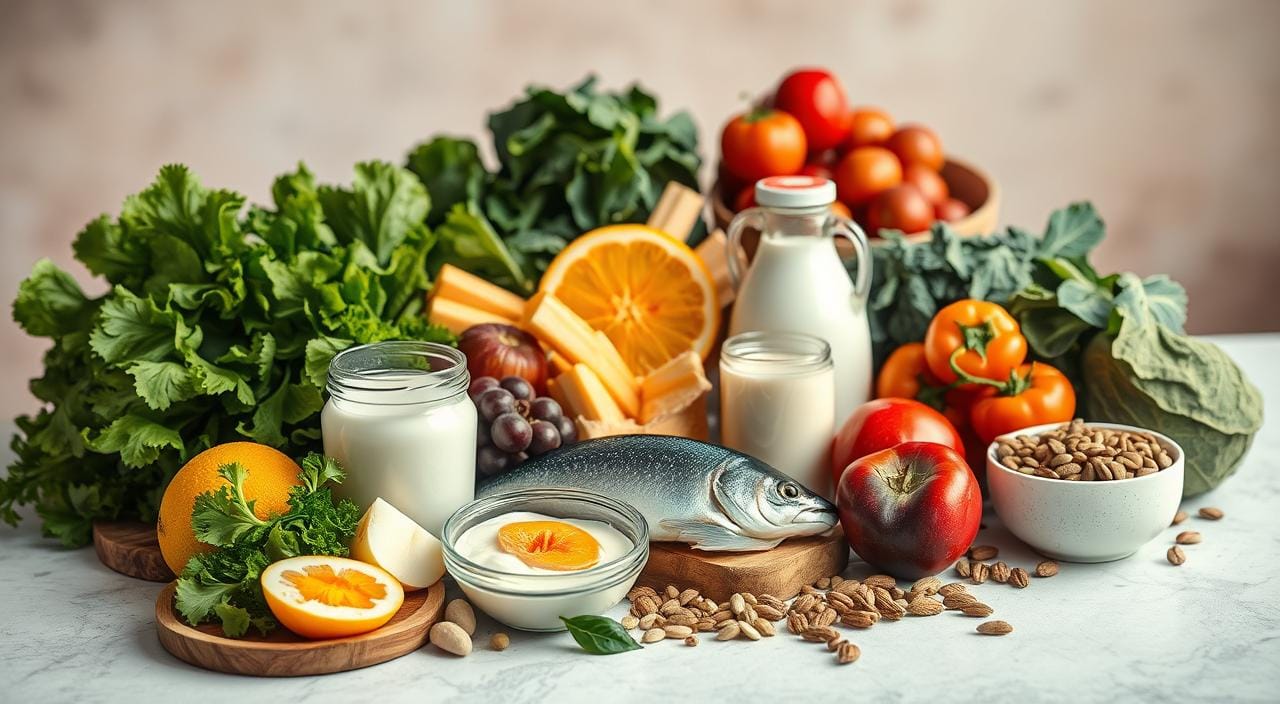
As a menopausal woman, you are crucial in maintaining your bone health. Calcium is key in this process. The daily intake recommended is 1000-1200 mg. This can come from food and supplements. Dairy, leafy greens, and fortified foods are good sources.
Ensuring enough calcium is vital for bone health. Menopausal women face a higher risk of osteoporosis due to hormonal shifts. The Food and Nutrition Board suggests 1200 mg daily for women aged 51-70. The table below outlines the recommended calcium intake by age:
| Age Group | Recommended Daily Calcium Intake |
|---|---|
| 19-50 years | 1000 mg |
| 51-70 years | 1200 mg |
| 71 years and older | 1200 mg |
It’s essential to get enough calcium to keep bones strong and prevent osteoporosis. As a menopausal woman, focus on calcium-rich foods and supplements. Also, aim for a balanced diet to support your bone health.
Vitamin D: The Sunshine Nutrient
Menopause brings unique challenges, and bone health is a top priority. Vitamin D is key for strong bones, with menopausal women needing 600-800 IU daily. Sunlight is a natural source, but many women don’t get enough. You can also find vitamin D in fatty fish and fortified foods, and supplements can help.
Experts stress the importance of maintaining bone strength for menopausal women. They can lose up to 20% of bone density due to estrogen decline. This raises the risk of osteoporosis, making it crucial to understand and act on bone health effects.
Vitamin D deficiency can cause tiredness, weakness, and bone pain. But, enough vitamin D can regulate mood and prevent anxiety and depression. It’s rare for vitamin D toxicity to occur, only with very high doses over time.
Remember, vitamin D is vital for bone health during menopause. By understanding its importance and ensuring adequate levels, you can protect your bones and overall health.
Magnesium and Bone Strength
As a menopausal woman, you’re likely keen on keeping your bones strong to avoid osteoporosis and fractures. Magnesium is key in this effort. It helps manage bone mineralization and density, making it crucial for your bone health.
Studies reveal many menopausal women don’t get enough magnesium, with about 20% falling short of the recommended amount. The daily magnesium intake for these women should be 320-420 mg. This can come from diet or supplements. Dark leafy greens, nuts, and whole grains are magnesium-rich foods.
A study showed women with osteoporosis have lower magnesium levels than those without. A systematic review of 12 studies also found that higher magnesium intake is linked to better bone density in the hips and femoral neck. These findings underscore magnesium’s role in bone strength and osteoporosis prevention.
To boost your magnesium intake, add magnesium-rich foods to your diet or consider supplements. It’s estimated that 45% of Americans lack magnesium, and 60% don’t meet daily intake recommendations. By focusing on magnesium, you can actively support your bone health and overall well-being.
| Magnesium Intake | Bone Mineral Density |
|---|---|
| 320-420 mg/day | Increased hip and femoral neck bone mineral density |
| Lower than recommended | Decreased bone mineral density, increased risk of osteoporosis |
Supporting Nutrients for Optimal Absorption
Maintaining strong bones during menopause requires attention to supporting nutrients for optimal absorption. Silicon, vitamin K, and boron are crucial for your body to effectively use calcium, vitamin D, and magnesium. Silicon aids in collagen formation, a protein essential for bone structure. Vitamin K is vital for activating proteins that work with calcium to build strong bones.
Research highlights the importance of silicon, vitamin K, and boron for menopausal bone health. They enhance the absorption and utilization of core nutrients, ensuring your body can effectively use them. For optimal absorption, a balanced diet rich in these nutrients is recommended. Foods like oats, almonds, and celery are good sources of silicon. Leafy greens such as spinach and kale are rich in vitamin K.
Incorporating these supporting nutrients into your diet can improve your body’s ability to absorb core nutrients. This supports your menopausal bone health. A well-balanced diet with a variety of whole foods provides the necessary nutrients for optimal absorption, helping maintain strong bones during menopause.
By focusing on a balanced diet and a healthy lifestyle, you can take control of your menopausal bone health and reduce the risk of osteoporosis and fractures.
A healthy diet and lifestyle are essential for maintaining strong bones during menopause. Understanding the role of supporting nutrients and incorporating them into your diet is a proactive step in protecting your bone health.
Lifestyle Factors Affecting Nutrient Absorption
As a menopausal woman, you’re likely aware of the importance of maintaining strong, healthy bones. Lifestyle factors, such as diet, exercise, and smoking, can significantly affect nutrient absorption and bone health. A balanced diet rich in essential nutrients, regular exercise, and a smoke-free lifestyle can help maintain strong, healthy bones.
By 2030, there will be around 1.2 billion menopausal women worldwide, emphasizing the need for awareness and education on maintaining bone health. The prevalence of obesity is increasing annually. This is due to unhealthy Western nutrition, characterized by high fat intake, high salt intake, low vegetable and fruit consumption, and low calcium intake.
Aerobic activities like walking, jogging, swimming, biking, and dancing can help prevent various health issues and improve HDL cholesterol levels. Weight-bearing exercises and moderate weight training post-menopause increase bone mass and help preserve spine bone mass to prevent fractures. Regular exercise aids in weight control, enhances heart and bone health, and boosts mood by releasing endorphins.
The following table summarizes the recommended daily intake of essential nutrients for menopausal women:
| Nutrient | Recommended Daily Intake |
|---|---|
| Calcium | 1,200 mg |
| Vitamin D | 600-800 IU |
By incorporating these lifestyle factors and nutrient intake recommendations into your daily routine, you can help maintain strong, healthy bones. This reduces the risk of osteoporosis and fragility fractures.
Common Myths About Menopausal Bone Health
Navigating menopause requires understanding the truth about bone health. Many believe osteoperosis is unavoidable with age. Yet, the right nutrients and lifestyle changes can lower your risk and keep bones strong.
Another myth is that bone health is solely genetic. While genetics matter, diet and exercise also play crucial roles. A balanced diet and regular exercise can bolster bone health and decrease osteoperosis risk.
It’s vital to debunk these myths and take action for your bone health. Knowing the facts and making smart choices can help you avoid osteoperosis and maintain robust bones for the future.
| Nutrient | Recommended Daily Intake |
|---|---|
| Calcium | 700mg |
| Phosphorus | 550mg |
| Magnesium | 270mg |
| Vitamin D | 10 micrograms |
By dispelling common myths and focusing on the facts, you can take control of your menopausal bone health. This empowers you to make informed decisions for your overall well-being.
Conclusion: Building Your Bone Health Action Plan
Creating a detailed bone health action plan is vital for keeping bones strong during menopause. A diet packed with calcium, vitamin D, and magnesium is key. Also, regular exercise and avoiding smoking are crucial steps to lower osteoporosis and fracture risks.
Your bone health path is personal, so it’s important to collaborate with your healthcare provider. Together, you can craft a plan tailored to your needs and goals. By focusing on the right nutrients and lifestyle changes, you can safeguard your bone health. This empowers you to navigate menopause with confidence and energy.
FAQ
What are the essential nutrients for maintaining bone health during menopause?
Why is calcium so important for menopausal women?
What is the role of vitamin D in menopausal bone health?
How does magnesium contribute to bone strength?
What other supporting nutrients are important for optimal bone health?
How do lifestyle factors affect nutrient absorption and bone health?
Is osteoporosis an inevitable part of aging for menopausal women?
Source Links
- Essential Nutrients for Bone Health and a Review of their Availability in the Average North American Diet
- Menopause and Bone Loss
- Bone Health during the Menopause Transition and Beyond
- The Relationship between Nutrient Patterns and Bone Mineral Density in Postmenopausal Women
- How Menopause Impacts Your Health
- Bone Health In Depth
- No title found
- The role of calcium in peri- and postmenopausal women: 2006 position statement of the North American Menopause Society – PubMed
- Calcium, Nutrition, and Bone Health – OrthoInfo – AAOS
- Calcium Intake in Bone Health: A Focus on Calcium-Rich Mineral Waters
- Vitamin D Factsheet – balance menopause
- Vitamin D and Bone Health; Potential Mechanisms
- An update on magnesium and bone health
- Magnesium for Osteoporosis
- Osteoporosis Diet & Nutrition: Foods for Bone Health
- Nutrition | International Osteoporosis Foundation
- The Importance of Nutrition in Menopause and Perimenopause—A Review
- Staying Healthy After Menopause
- Food for healthy bones
- Common Menopause Myths: Separating Fact From Fiction
- Menopause Nutrition Myths – Caroline Hill Nutrition
- Determinants of Bone Health – Bone Health and Osteoporosis
- Menopause and Bone Health