
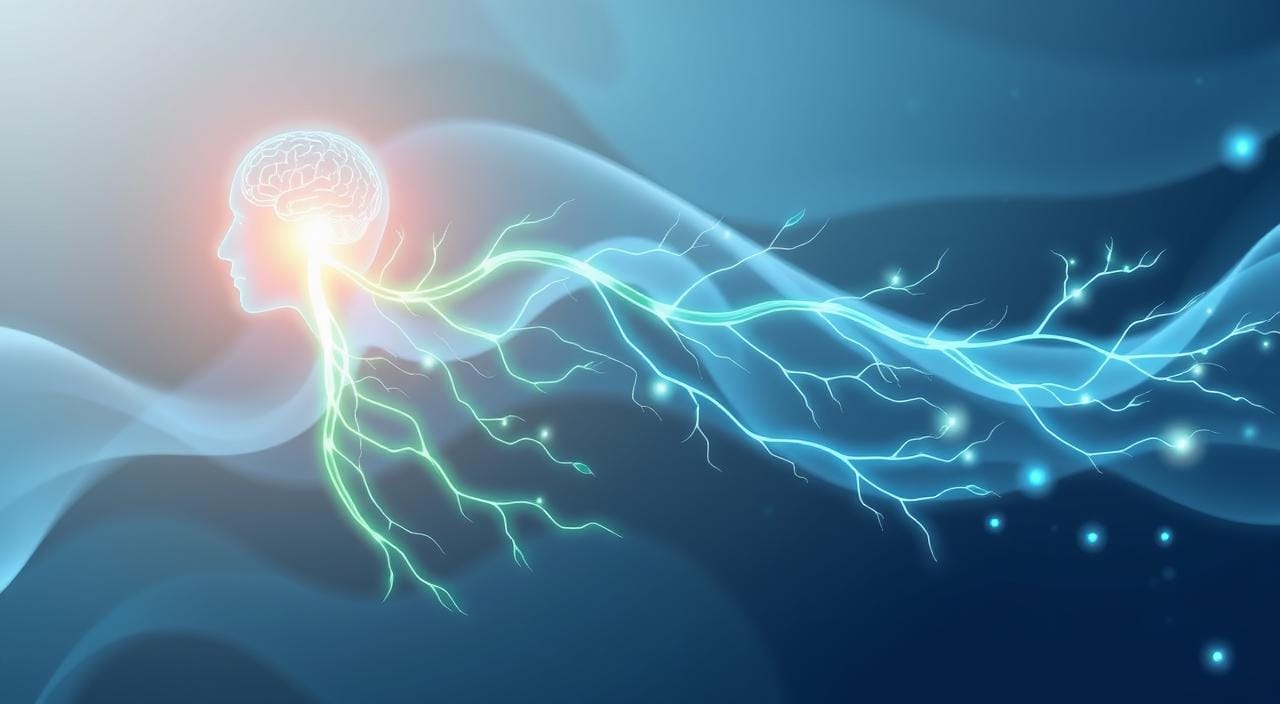

Did you know that stimulating the vagus nerve can potentially alleviate up to 70% of menopause symptoms? This remarkable nerve, which runs from your brainstem to your abdomen, plays a vital role in regulating your body’s internal functions. As women seek natural remedies for menopause, the focus is increasingly shifting towards holistic health approaches. Vagus nerve stimulation has emerged as a promising technique for providing menopause relief naturally.
The vagus nerve is often referred to as the “wandering nerve” because of its extensive course through your body. It influences crucial aspects like heart rate, digestion, and stress responses. By harnessing the power of the vagus nerve, women can explore a more natural way to address the disruptive changes that accompany menopause, including hot flashes, mood swings, and sleep disturbances.
Key Takeaways
- Vagus nerve stimulation may reduce up to 70% of menopause symptoms.
- The vagus nerve influences heart rate, digestion, and stress responses.
- Natural remedies for menopause are increasingly focusing on holistic health techniques.
- Hot flashes, mood swings, and sleep disturbances may be alleviated through vagus nerve functions.
- The vagus nerve is a crucial component in managing menopause symptoms naturally.
Understanding the Vagus Nerve: The Key to Natural Relief

Exploring the vagus nerve reveals a treasure trove of non-pharmacological solutions for symptom relief. This nerve is pivotal in the autonomic nervous system, mainly under parasympathetic control. It promotes relaxation and healing.
The vagus nerve stretches from your brain to your abdomen, influencing many bodily functions. Its parasympathetic control is key. Boosting vagal tone can significantly enhance your health by activating these relaxation responses.
Recent studies uncover ways to elevate vagal tone. Deep breathing exercises, mindfulness practices, cold exposure such as cold shower or face immersion, and a balanced diet are among the non-pharmacological solutions. Also, engaging the vocal cords by singing humming or chanting can positively affect the vagus nerve. These activities stimulate the vagus nerve, supporting the autonomic nervous system’s health. They offer natural relief methods.
Menopause Symptoms and the Role of the Vagus Nerve
Menopause brings a range of symptoms that can impact your life quality. These symptoms often stem from hormonal shifts, affecting your hormonal balance. Issues like mood swings, hot flashes, and cognitive fog can arise from these changes.
The vagus nerve plays a crucial role in this process. It influences neurotransmitters such as serotonin and dopamine. This interaction helps regulate mood and emotional stability.
Seeking natural menopause treatments is vital for holistic symptom management. The vagus nerve’s role in maintaining hormonal balance and neurotransmitter modulation offers a promising avenue for natural remedies.
Let’s delve into common symptoms and how the vagus nerve can help alleviate them:
| Symptom | Role of the Vagus Nerve | Potential Natural Treatment |
|---|---|---|
| Hot Flashes | Regulation of body temperature | Breathing exercises to engage the vagus nerve |
| Mood Swings | Balance of neurotransmitters | Meditation and mindfulness practices |
| Insomnia | Promotion of relaxation and sleep | Yoga and relaxing routines before bedtime |
Understanding the vagus nerve’s power can lead to personalized, natural symptom management. Incorporating these strategies into your daily life may bring substantial relief and improve your overall well-being.
Vagus Nerve and Cognitive Fog During Menopause
Cognitive fog is a common irritant during menopause, impacting brain health and mental clarity. The vagus nerve plays a significant role in mitigating this challenge by fostering neuroplasticity and cognitive enhancement. Understanding the relationship between vagus nerve stimulation and improved cognitive function can lead to potential solutions for menopausal women.
Stimulation of the vagus nerve has shown promising results in enhancing brain health. By promoting neuroplasticity, the vagus nerve aids in the restructuring of brain pathways, which is essential for cognitive enhancement. This process helps improve mental clarity, which is often compromised during menopause.
The evidence supporting improved mental clarity through vagus nerve activities is continually growing. Studies have highlighted the connection between vagal nerve stimulation and enhanced cognitive functions. This suggests that it could be a viable approach for managing cognitive fog. Embracing these findings can significantly uplift brain health during menopause.
Consider implementing consistent vagus nerve stimulation techniques to alleviate cognitive fog. By doing so, you can foster neuroplasticity and mental clarity. These are essential components for maintaining brain health and achieving cognitive enhancement during this pivotal stage of life.
Inflammation and Joint Pain: Natural Solutions Through the Vagus Nerve
The vagus nerve is vital in reducing inflammation, offering significant anti-inflammatory effects. These benefits are crucial for those experiencing menopause, as joint pain often increases during this time due to hormonal changes.
Stimulating the vagus nerve can enhance its anti-inflammatory capabilities. This provides natural solutions that promote joint health. Increased vagal activity is associated with reduced inflammation, making it a potential strategy for chronic pain relief.
Navigating menopause can be challenging, but techniques that stimulate the vagus nerve may offer relief. These natural anti-inflammatory solutions could be a key step in managing menopause-induced joint pain effectively.
Cardiovascular Changes in Menopause: A Vagus Nerve Connection
Menopause brings significant cardiovascular changes for many women. The vagus nerve’s role is crucial in addressing these changes. It plays a key part in managing heart rate variability and blood pressure, vital for overall heart health.
Heart rate variability (HRV) is a key indicator of cardiovascular health. The vagus nerve affects HRV by regulating the autonomic nervous system. This enhances your body’s stress response, offering natural heart support during menopause.
Blood pressure regulation is also influenced by the vagus nerve. Healthy vagal tone helps control blood pressure, protecting against hypertension. Menopause often brings blood pressure fluctuations, making vagus nerve health vital.
To naturally support your heart health, consider adding vagus nerve stimulation to your routine. Techniques like deep breathing, mindfulness meditation, or gentle yoga can boost vagal tone. These practices offer natural heart support during menopause.
| Cardiovascular Aspect | Role of Vagus Nerve | Impact During Menopause |
|---|---|---|
| Heart Rate Variability | Regulates autonomic nervous system | Improves adaptability and resilience |
| Blood Pressure Regulation | Maintains healthy blood pressure levels | Mitigates risk of hypertension |
| Overall Cardio Health | Supports heart function and stress response | Enhances natural heart support |
Digestive Issues During Menopause: Relief via the Vagus Nerve
Menopause introduces a range of changes, including digestive problems that can be quite distressing. Understanding the gut-brain axis and its effects on digestive health opens up new avenues for relief.
The vagus nerve is crucial in the gut-brain axis, making it essential for addressing digestive issues during menopause. By stimulating this nerve, we can improve digestive health. This offers a valuable natural remedy for managing these symptoms.
Studies show that deep breathing, meditation, and specific yoga poses can activate the vagus nerve. This activation doesn’t just boost overall well-being; it also directly improves digestion. It provides the necessary relief from menopause digestive problems. Combining natural digestive remedies with these techniques ensures a comprehensive approach to managing digestive health during this transformative phase.
| Technique | Benefit | Application |
|---|---|---|
| Deep Breathing | Stimulates Vagus Nerve | Practice daily for 5-10 minutes |
| Meditation | Reduces Stress | Engage in guided sessions |
| Yoga | Enhances Digestive Function | Incorporate specific poses like Cat-Cow |
Adding these techniques to your daily routine can significantly improve menopause digestive relief. As you delve into the gut-brain axis and explore natural digestive remedies, you’ll find a healthier, more balanced way to manage your digestive health during menopause.
Managing Stress and Irritability through Vagus Nerve Techniques
Managing stress and irritability during menopause is vital for emotional well-being. Targeting the vagus nerve can lead to notable stress reduction and natural stress management. Incorporating vagus nerve stimulation into your relaxation techniques is an effective approach.
Deep breathing exercises and meditation are powerful tools for relaxation. When practicing deep breathing, focus on slow, deep breaths and the sensation of air filling your lungs. This activates the vagus nerve, inducing calm and reducing stress.
Yoga and tai chi are also excellent for natural stress management. These practices engage the body physically and encourage mindfulness, boosting emotional well-being. Progressive muscle relaxation, where you tense and then release different muscle groups, also helps ease the body and mind.
Here’s a comparison of various relaxation techniques and their benefits for stress reduction:
| Relaxation Technique | Benefit |
|---|---|
| Deep Breathing | Activates vagus nerve, reduces stress |
| Meditation | Enhances mindfulness, promotes calm |
| Yoga | Combines physical exercise with mental relaxation |
| Tai Chi | Improves balance, reduces anxiety |
| Progressive Muscle Relaxation | Releases physical tension, calms the mind |
Integrating these relaxation techniques into your daily routine can effectively manage stress and irritability. By stimulating the vagus nerve, you enhance emotional well-being during menopause. Consistent practice is crucial for the full benefits of these natural stress management methods.
Reducing Hot Flashes and Night Sweats with Vagus Nerve Stimulation
Hot flashes and night sweats are major challenges during menopause. Fortunately, vagus nerve stimulation offers a beneficial approach to manage these symptoms. It enhances temperature regulation, providing natural hot flash remedies that bring relief and restore comfort.
The vagus nerve is key in thermoregulation, crucial for managing body temperature. Stimulating this nerve can significantly reduce hot flashes, offering much-needed relief. Techniques like deep breathing, cold-water face immersion, and mindfulness exercises can also aid in temperature regulation. These methods are practical and natural ways to manage hot flashes and ensure a comfortable body temperature.
Here is a comparison illustrating the impact of vagus nerve stimulation on hot flashes and night sweats:
| Symptom | Before Stimulation | After Stimulation |
|---|---|---|
| Hot Flashes (per day) | 10-12 | 3-5 |
| Night Sweats (per week) | 5-7 | 1-2 |
By embracing these natural hot flash remedies, you can achieve significant improvement in your overall well-being. Focusing on thermoregulation through vagus nerve stimulation presents an effective and holistic approach to managing menopause symptoms. It ensures a more comfortable and balanced life.
Sleep Disturbances: Finding Rest Through Vagus Nerve Health
Sleep disturbances are a common issue during menopause. Enhancing vagus nerve health can be a game-changer for improving sleep quality. The vagus nerve plays a vital role in regulating your body’s circadian rhythm, helping you achieve restorative sleep naturally.
Natural sleep aids, coupled with targeted vagus nerve stimulation techniques, can significantly contribute to sleep quality improvement. By understanding the connection between the vagus nerve and sleep, you can better manage the disruptions that often come with menopause.
One effective approach involves harnessing the vagus nerve’s ability to calm the nervous system. This can help you fall asleep faster and maintain a deeper sleep cycle, addressing the core of your sleep disturbances.
Here’s a look at how the vagus nerve supports better sleep:
| Technique | Benefit |
|---|---|
| Deep Breathing Exercises | These can activate the vagus nerve, promoting relaxation and enhancing your circadian rhythm. |
| Cold Exposure | Cool temperatures stimulate the vagus nerve, which can lead to more restorative sleep cycles. |
| Meditation | Daily meditation practices can help regulate your vagus nerve, improving overall sleep quality. |
Integrating these natural sleep aids into your routine can greatly benefit your sleep patterns. It ensures you achieve the restorative sleep you deserve.
Alleviating Mood Swings, Anxiety, and Depression in Menopause
Menopause brings significant emotional changes, often leading to mood swings, anxiety, and depression. A healthy vagus nerve acts as a natural mood stabilizer, crucial for managing these symptoms. By boosting vagus nerve function, you can see improvements in mental health and anxiety relief.
Research indicates the vagus nerve’s role in emotional balance, offering a natural remedy for emotional instability. Techniques like deep breathing, meditation, and yoga stimulate the vagus nerve, aiding emotional regulation. These practices also serve as natural mood stabilizers, offering a holistic mental health approach.
Adopting these methods can lessen mood swings, promoting calm and well-being. Achieving better emotional regulation and anxiety relief helps navigate menopause’s challenges with confidence.
| Vagus Nerve Technique | Effect on Mental Health |
|---|---|
| Deep Breathing | Anxiety Relief |
| Meditation | Enhanced Emotional Regulation |
| Yoga | Natural Mood Stabilizer |
By prioritizing vagus nerve health, you can proactively improve mental health during menopause. Focusing on these practices leads to emotional balance, enhancing overall well-being and reducing psychological distress during this time.
Conclusion
Our journey through menopause and the vagus nerve has shown its immense power. Understanding this nerve can significantly alter your experience. We’ve explored how it affects menopause symptoms, from cognitive fog to hot flashes. This knowledge highlights the importance of holistic health in improving life quality during this time.
By incorporating natural therapies, like vagus nerve stimulation, into your life, you can better manage symptoms. This approach supports your body’s overall health, reducing the need for medication. The health of your vagus nerve is linked to your overall wellness, showing the interconnectedness of our bodies.
Menopause doesn’t have to be overwhelming. With knowledge of your vagus nerve, you can make informed health choices. Adopting natural and holistic methods can ease your menopause journey. This will likely enhance your quality of life, making this transition smoother.